Instagram Instants
A new, ephemeral Instagram format for sharing unedited, disappearing photos among friends.
Role
Content Design Lead, Instagram Labs Studio
What I owned
System architecture, content standards including naming, onboarding, UI copy, notifications
Partners
PM, Product Design, UXR, Data Science, Engineering, Brand
Timeline
Oct 2024 - May 2026
Launch
May 2026. Global on Instagram, plus a standalone app in select countries.
Impact
100M+ users. +24% teen media creation.
The people problem
Teens want casual, low-pressure ways to share everyday moments with friends. In research, they described Instagram as something they watch, not somewhere they connect, and compared it to watching TV. The data matched: they were opening the app more than ever, but sharing with friends was declining.
The business problem
Teens are Instagram's most important audience. They set trends, shape culture, and decide which apps their generation uses next. But their everyday sharing was moving to apps like BeReal and Snapchat, built for private, disappearing photos with close friends.
The opportunity
How might we give teens a casual, low-pressure way to share everyday moments with friends on Instagram?
My role + process
Instagram Labs is a small team that builds new products from scratch. As the content design lead, I helped define what Instants would be, not just how it would read. I shaped it across three phases:
- Framing the problem. I co-led workshops that aligned PM, Engineering, and Design on the product's core value, who it was for, and what it wouldn't do.
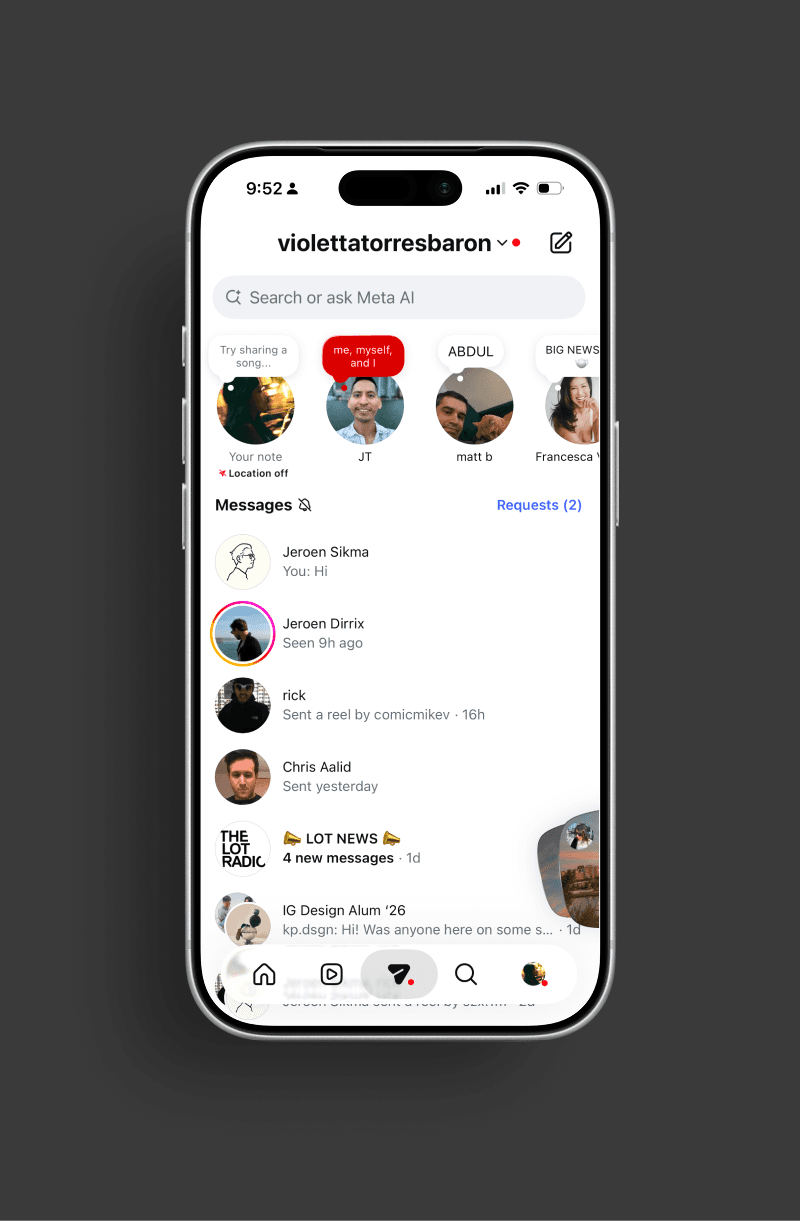
- Building the system. I defined the product's vocabulary, led naming, and mapped where Instants would live across Instagram.
- Crafting and testing the experience. I wrote the onboarding, UI copy, and notifications, then refined them through rounds of beta feedback.
Finding the solution
I led a cross-functional audit of Instagram's sharing formats, comparing audience, permanence, editing, steps to send, and intent. Every format asked teens to curate, compose, or choose an audience. None let them share a raw moment instantly.
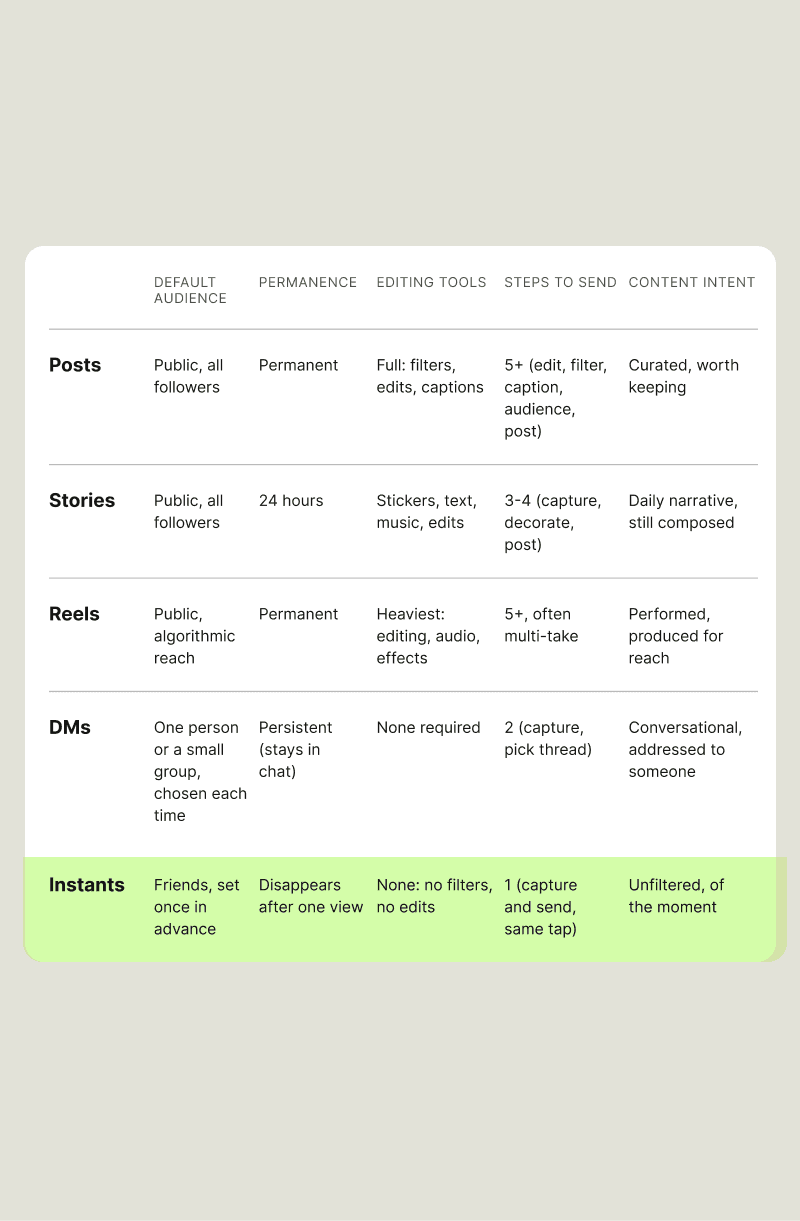
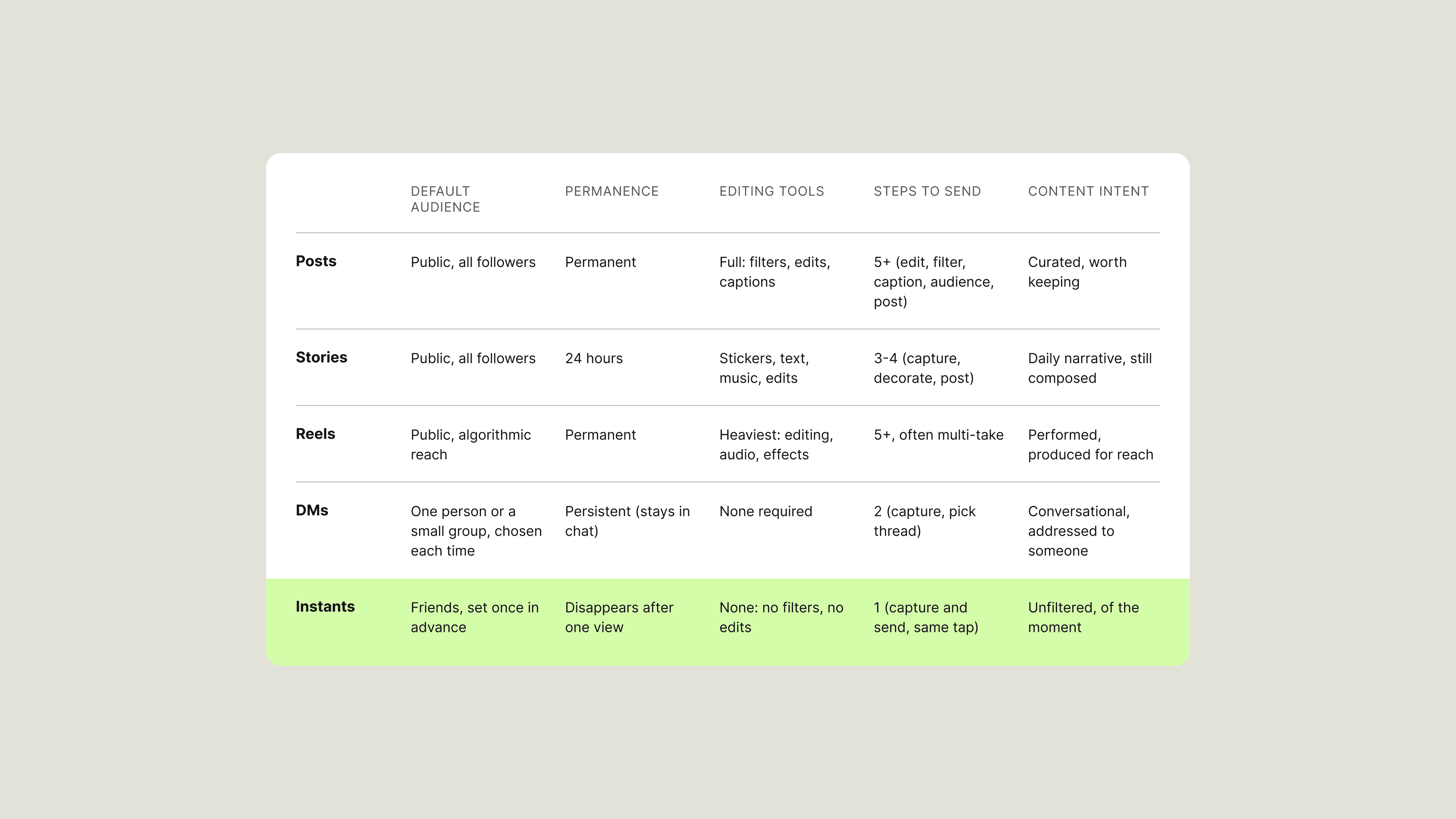
Define the mechanics. With PM, Data Science, and UXR, I tested options against real behavior and landed on four rules:
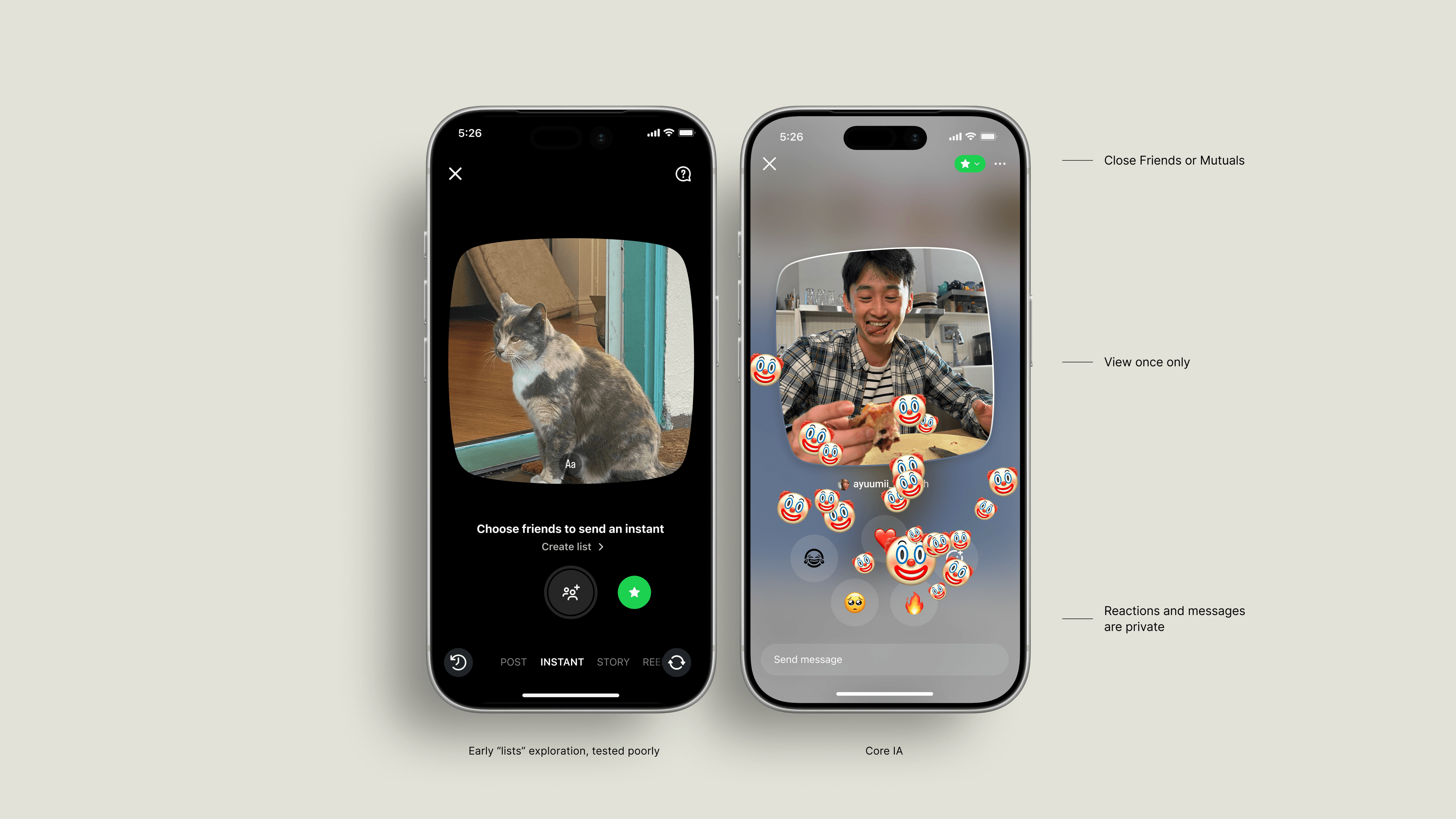
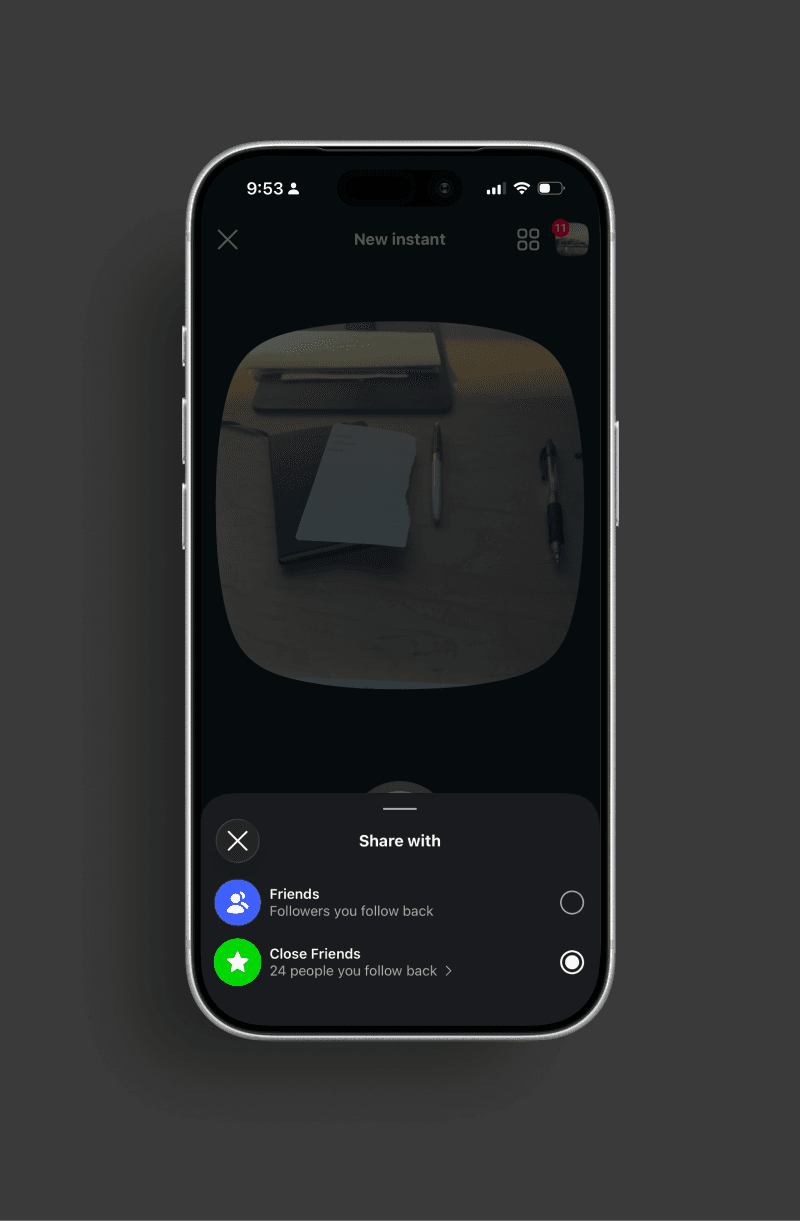
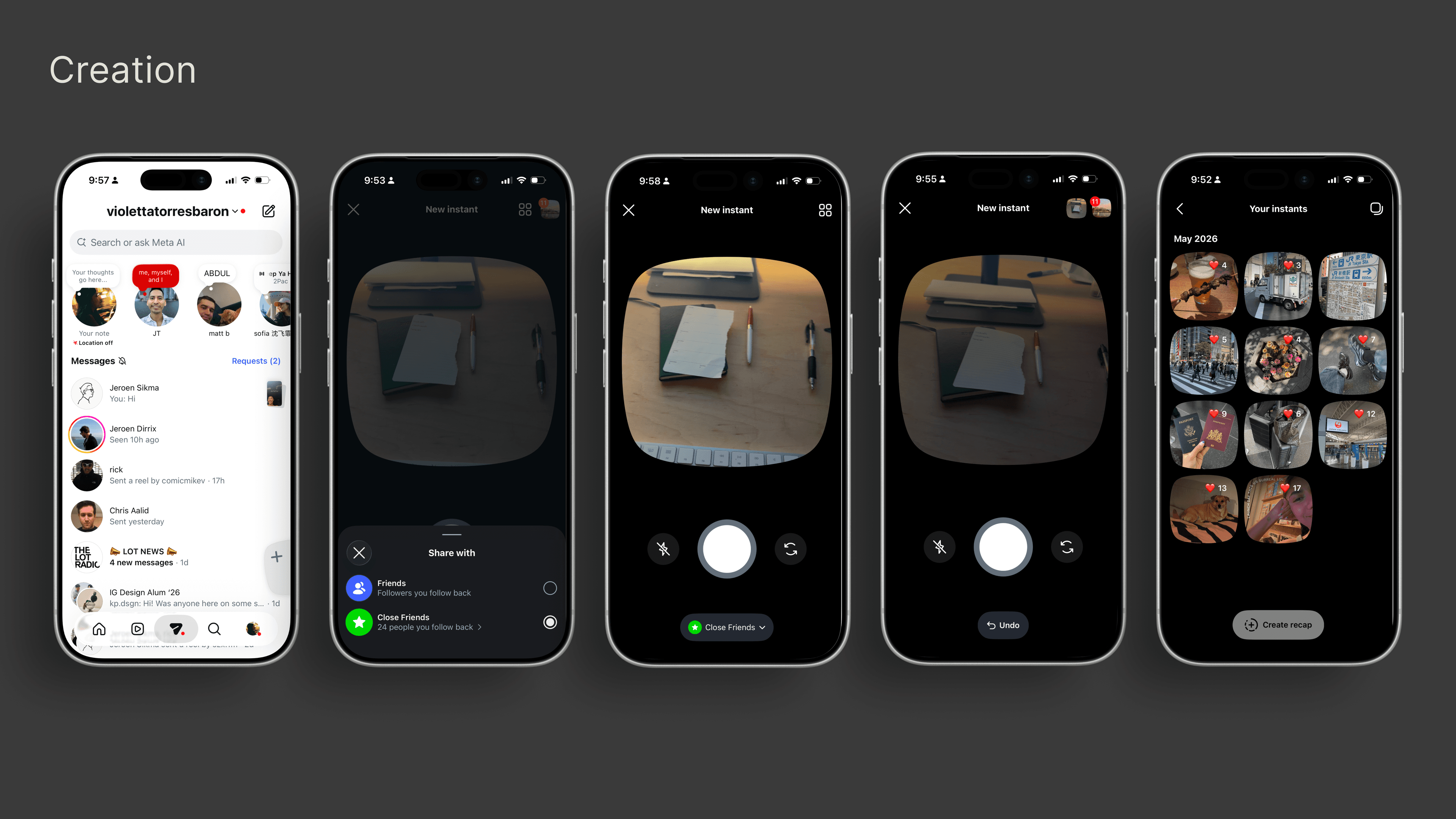
- Audience: Close Friends or followers you follow back. No public sharing, and no choosing an audience every time.
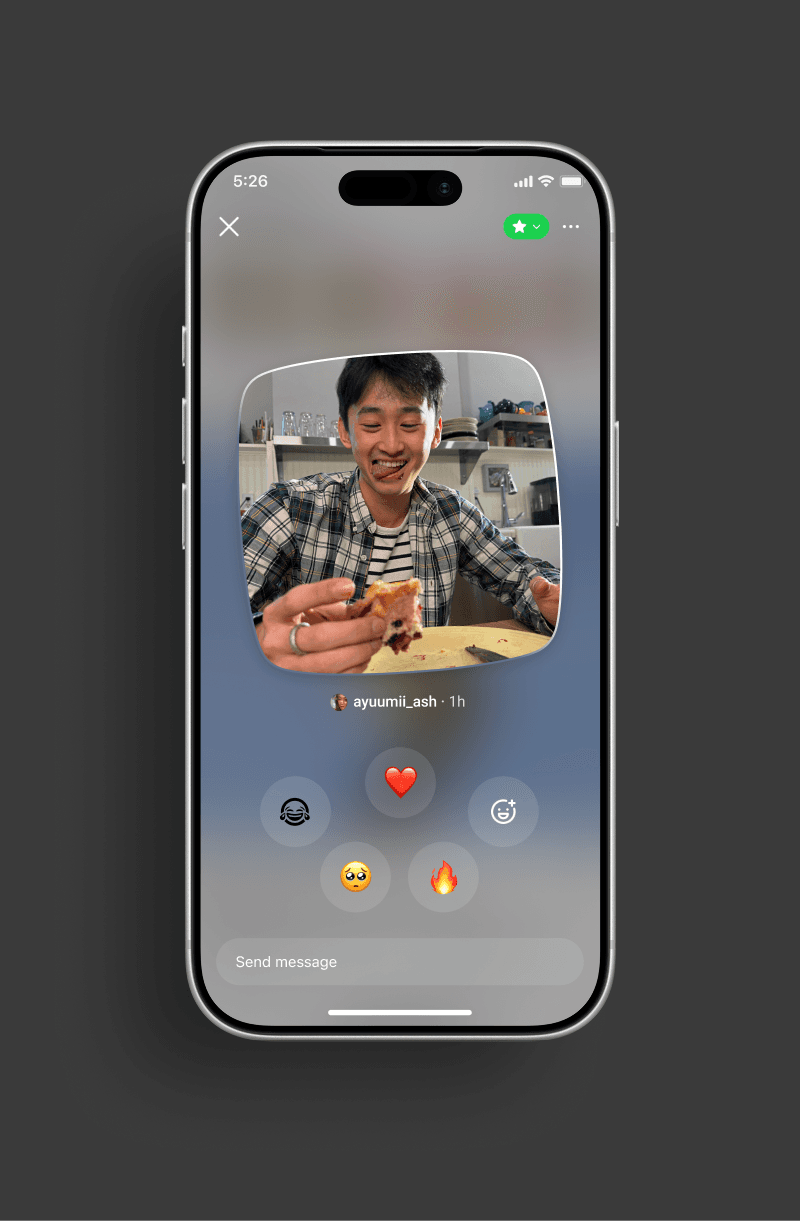
- Permanence: Photos disappear once they're viewed, and expire after 24 hours.
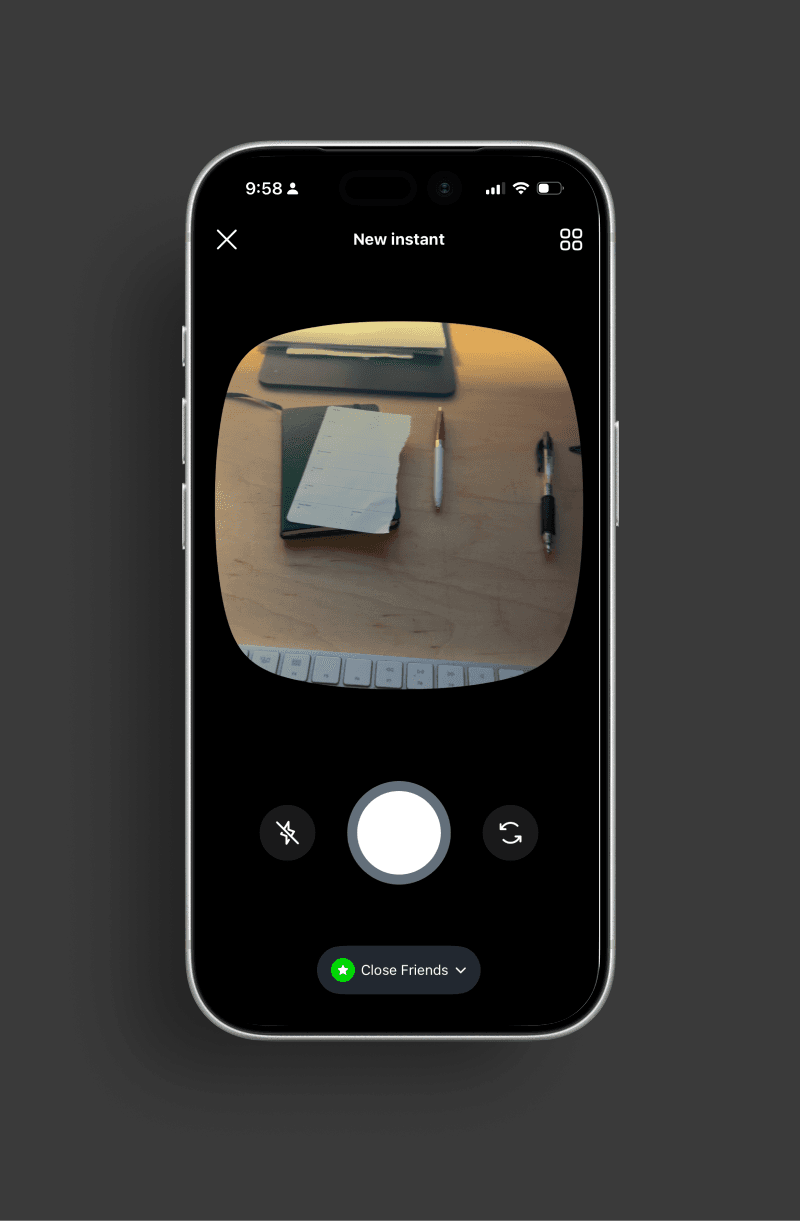
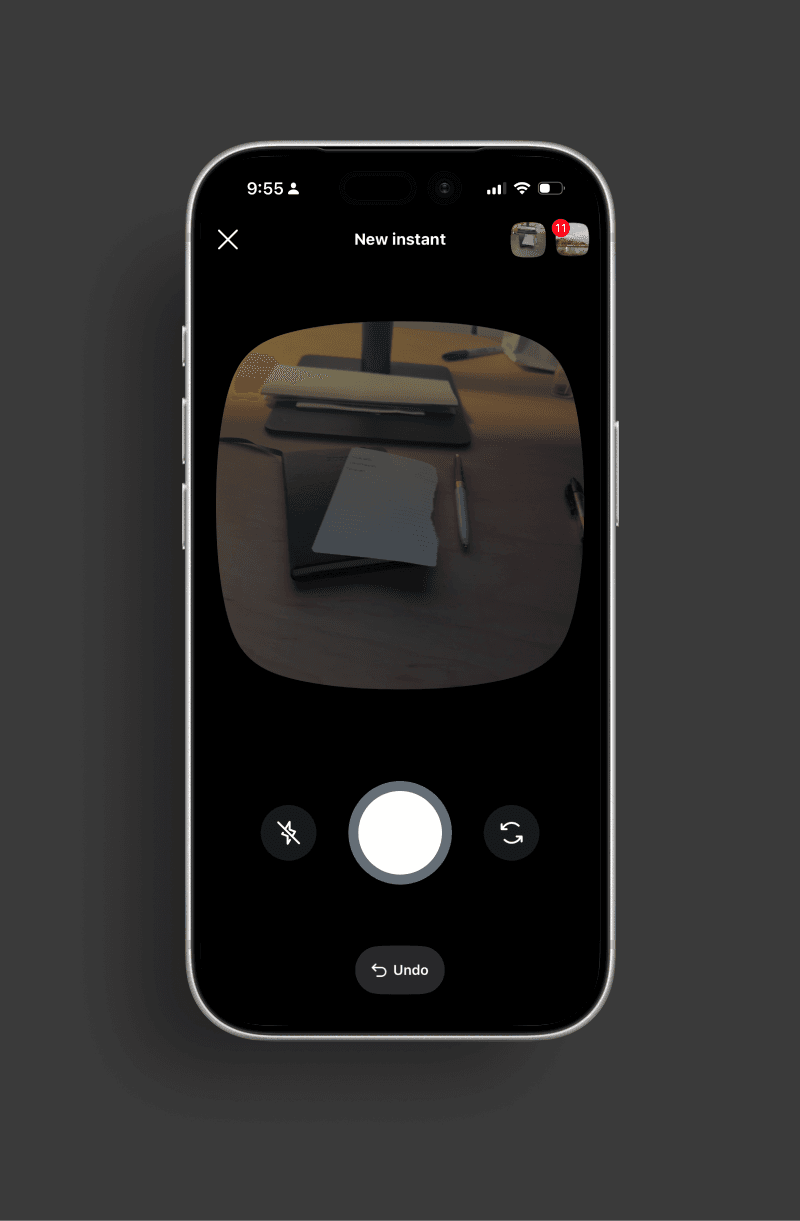
- Creation: Live camera only. There are no camera roll uploads, and nothing to edit except a caption.
- Friction: One tap to capture and send.
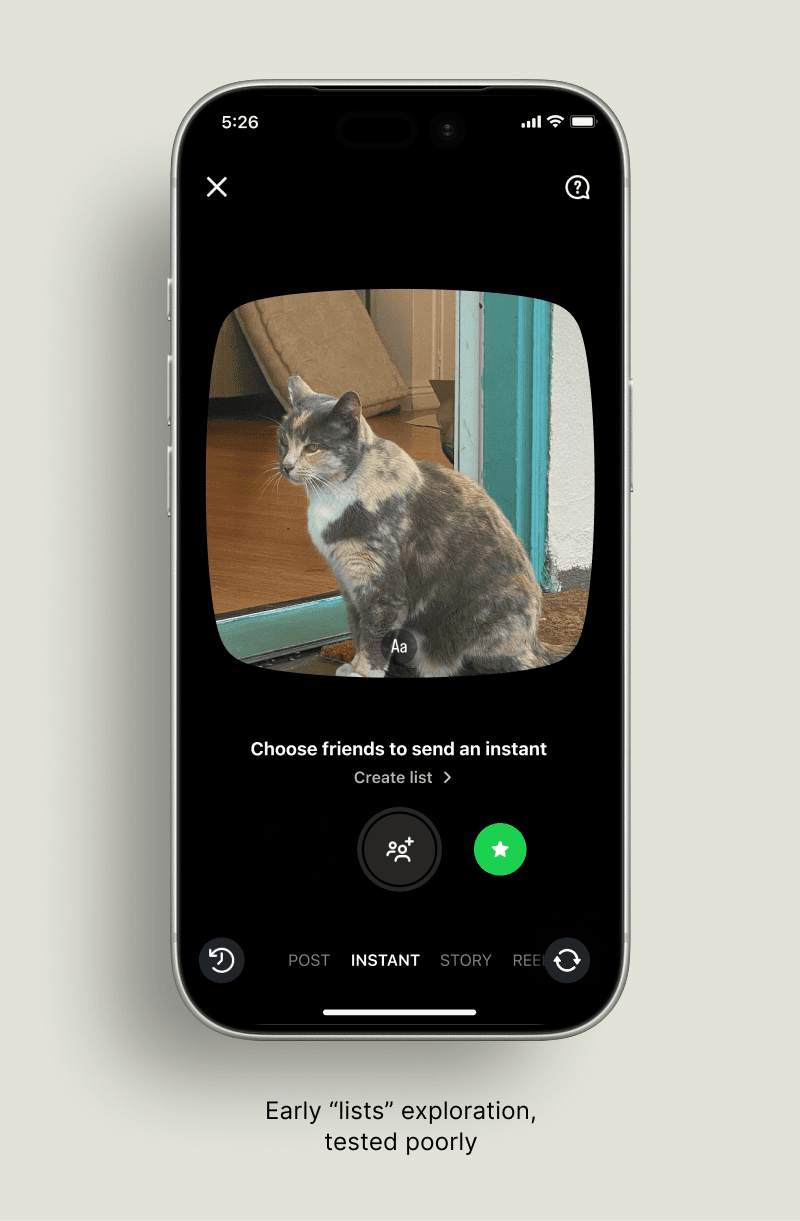
An early version asked people to build a custom friend list. It tested poorly in beta, so we cut it.
Earn the right to build it. Leadership's instinct was to do the simple thing first. We tested lighter versions inside Stories and DMs, then ran a global experiment with Data Science. Only a standalone format delivered real value, and that result secured sign-off to ship.
Key content design decisions
1. Naming: "Instants," not "Shot"
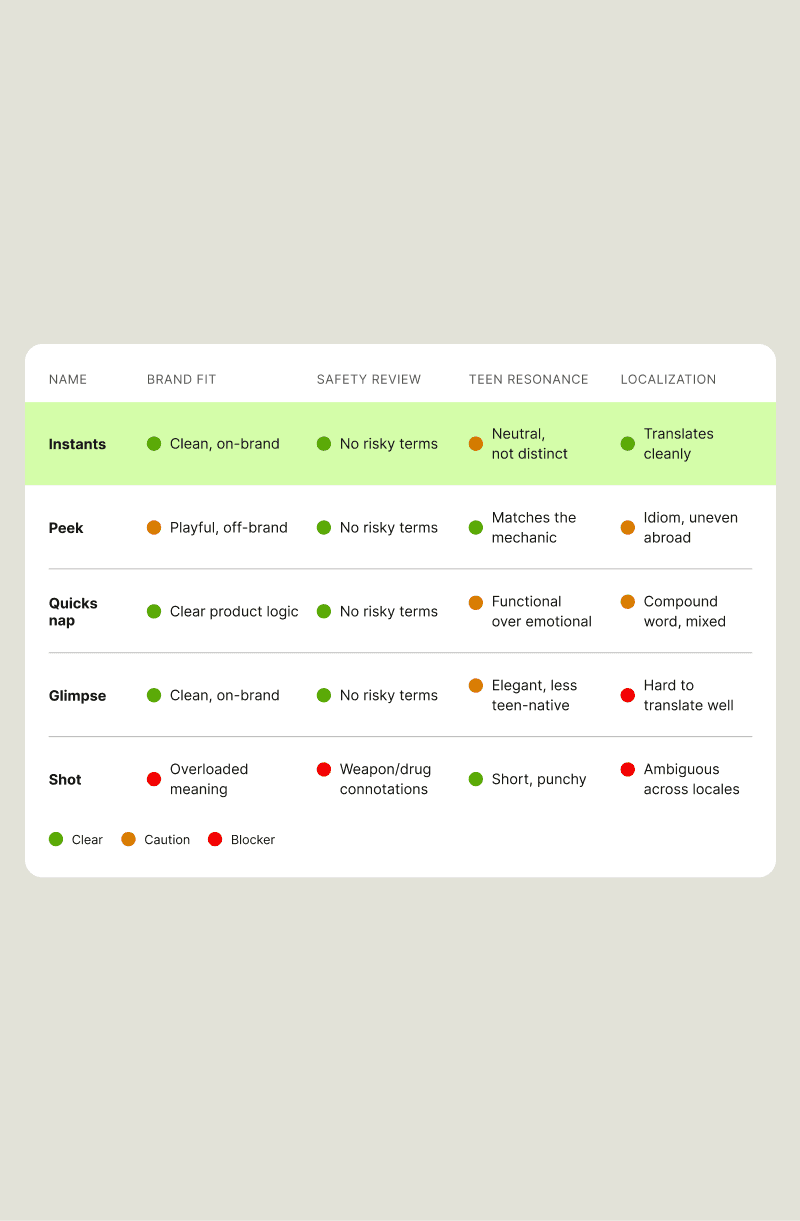
I owned naming from first brainstorm to leadership sign-off. Leadership favored "Shot," but Safety flagged its weapon and drug connotations, so I built a rubric that scored five names on brand fit, safety, teen resonance, and localization. It turned a debate over preferences into a decision grounded in criteria. "Instants" scored strongest overall, and a LATAM test of "Instantánea" drove a 43% lift in teen creation, which gave me the evidence to align leadership.
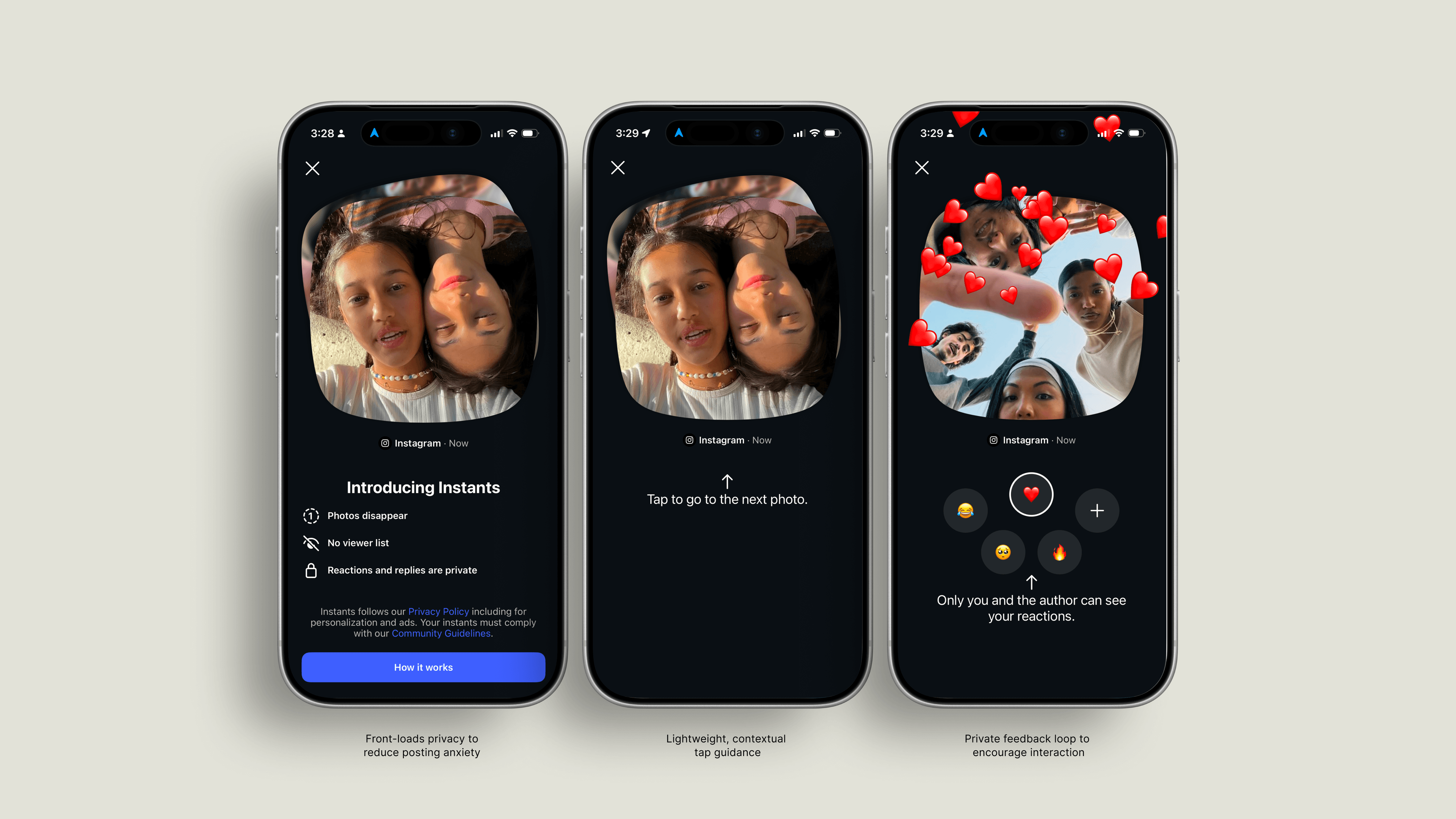
2. Onboarding: Three privacy promises before the first tap
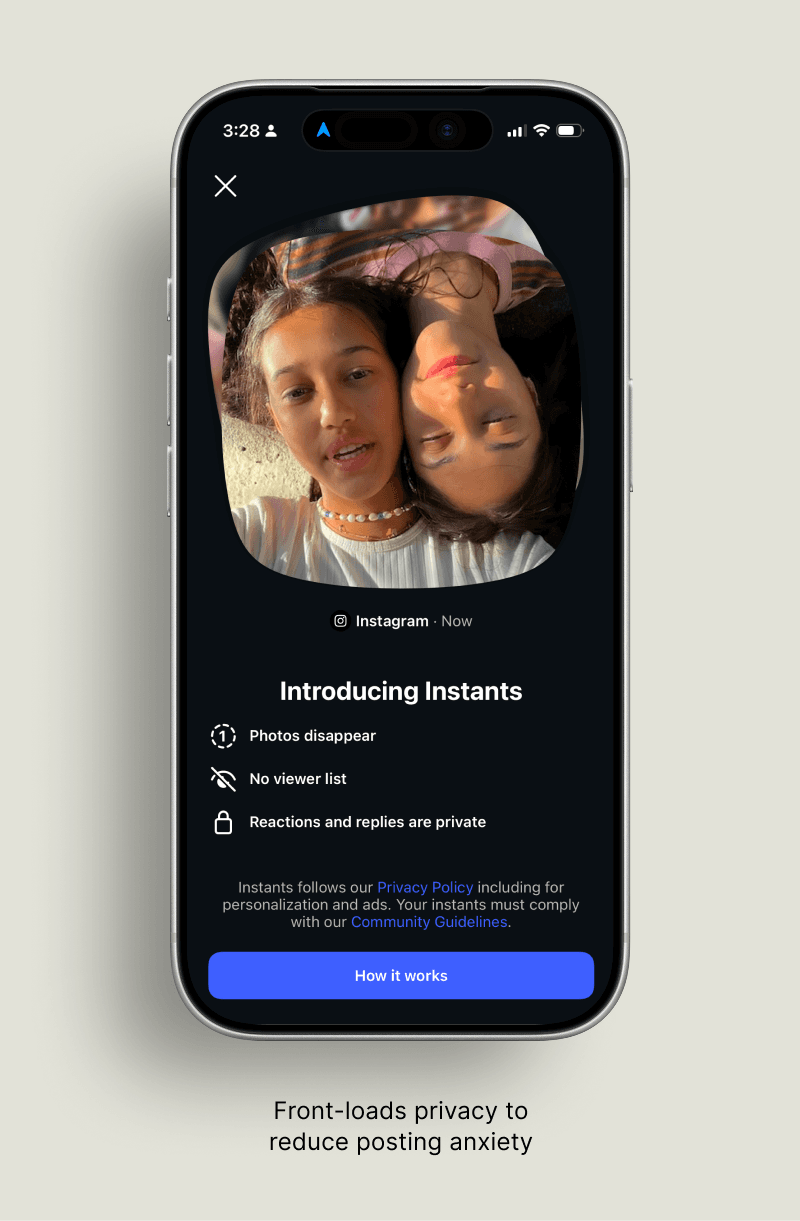
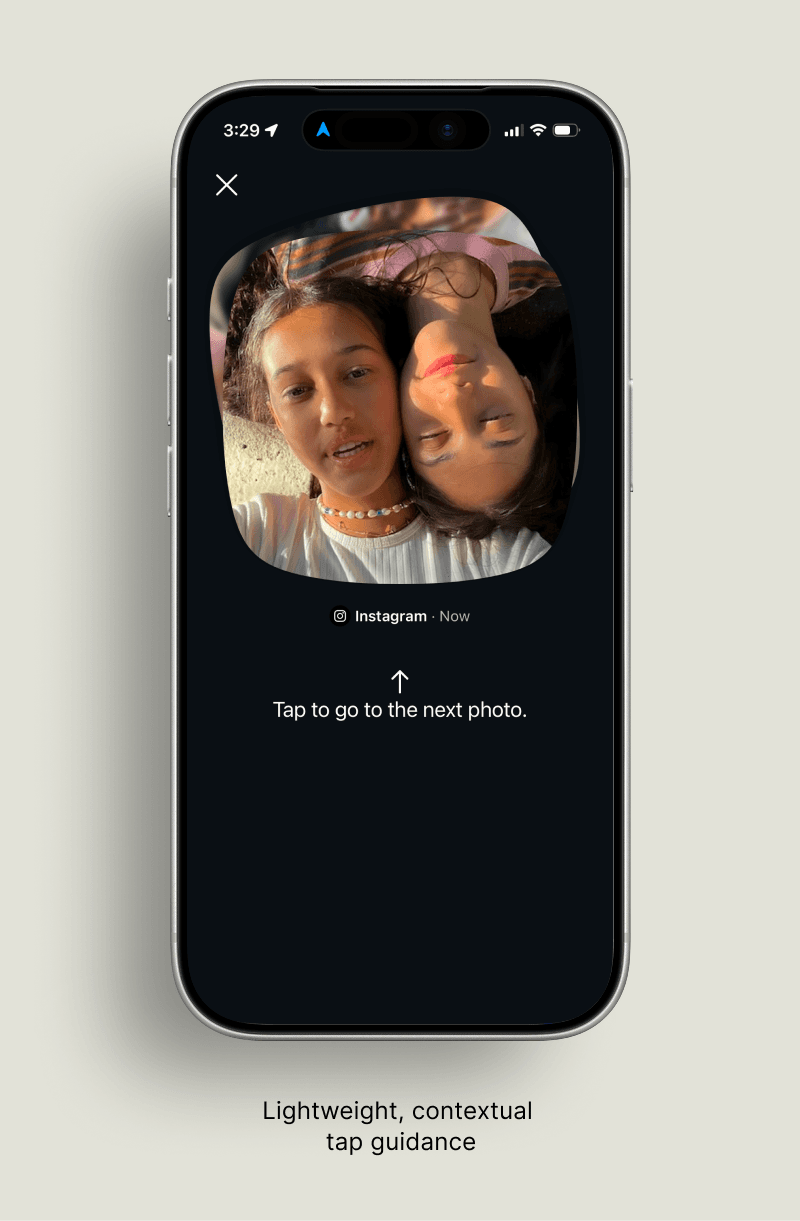
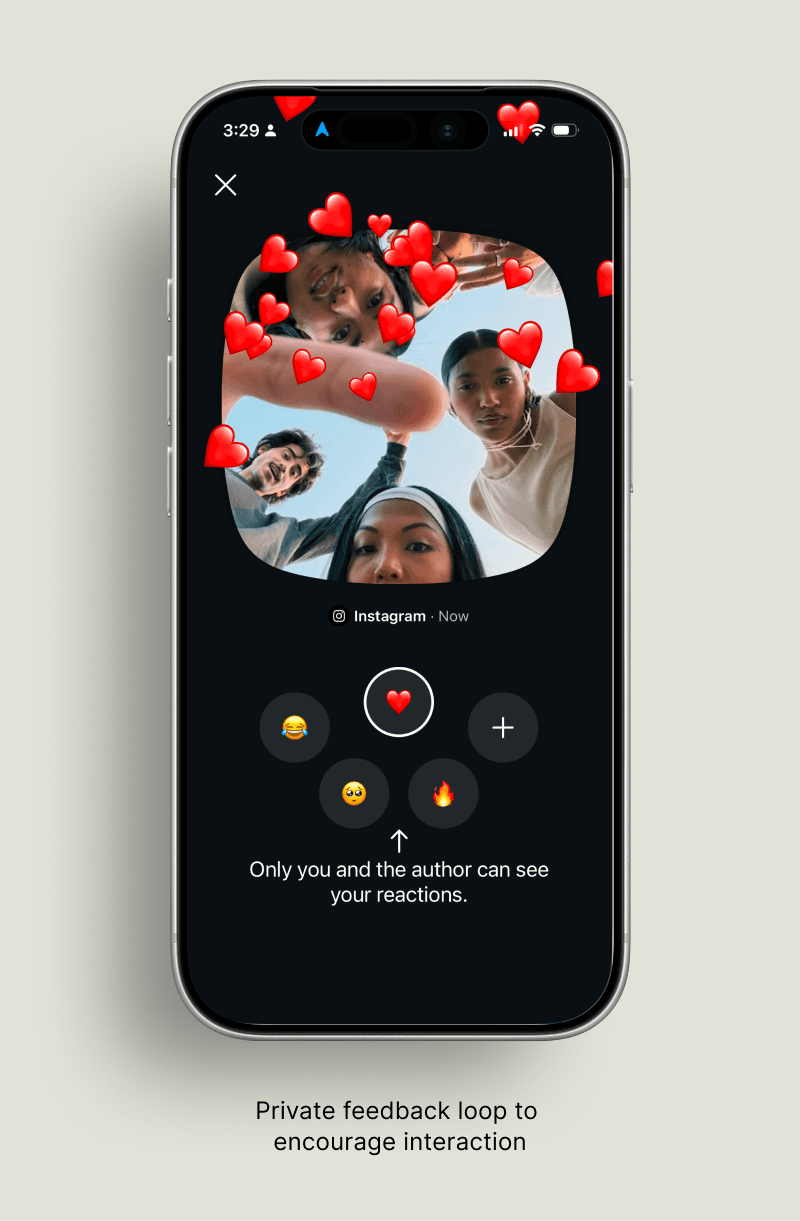
Research showed teens' biggest hesitation was privacy, not how the product worked, so I reordered onboarding around that insight. Working with PM and UXR, I opened with three privacy promises before teaching a single mechanic, then taught each one inline, with a single line at the moment it's needed.
3. Safety messaging: Guardrails that protect without punishing
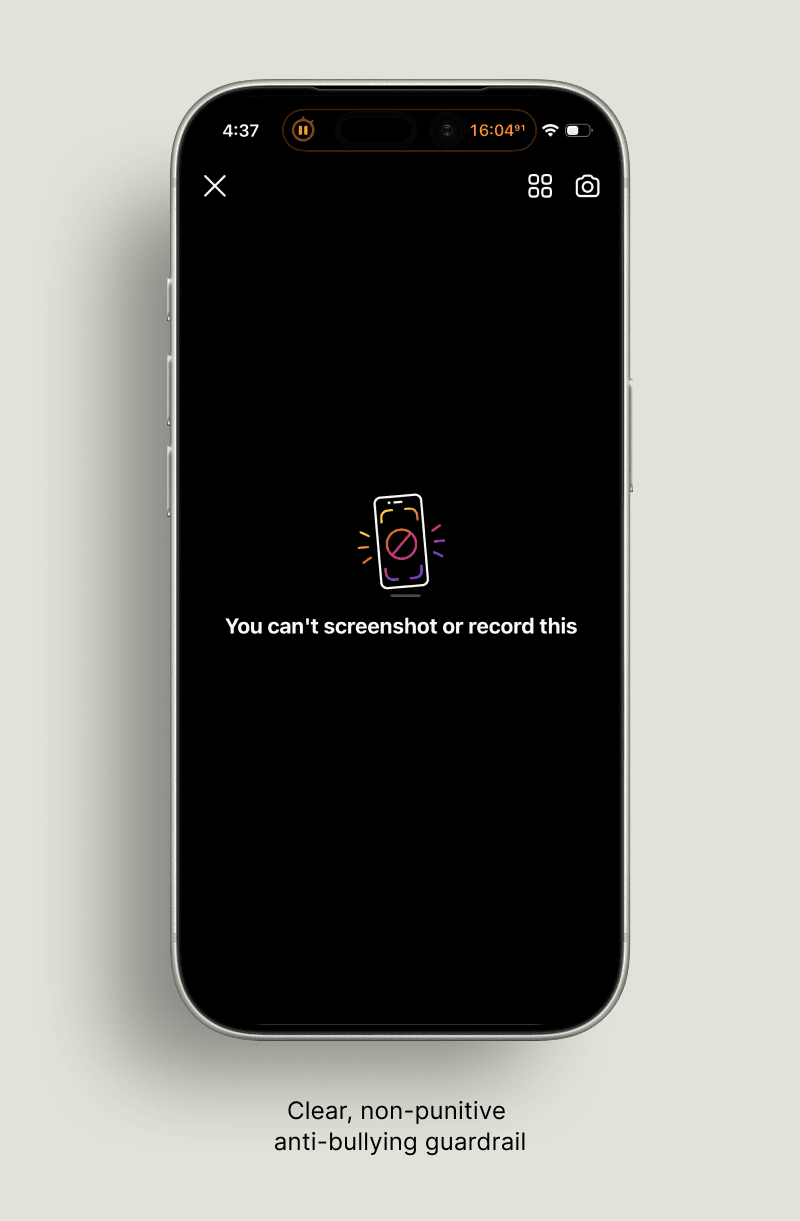
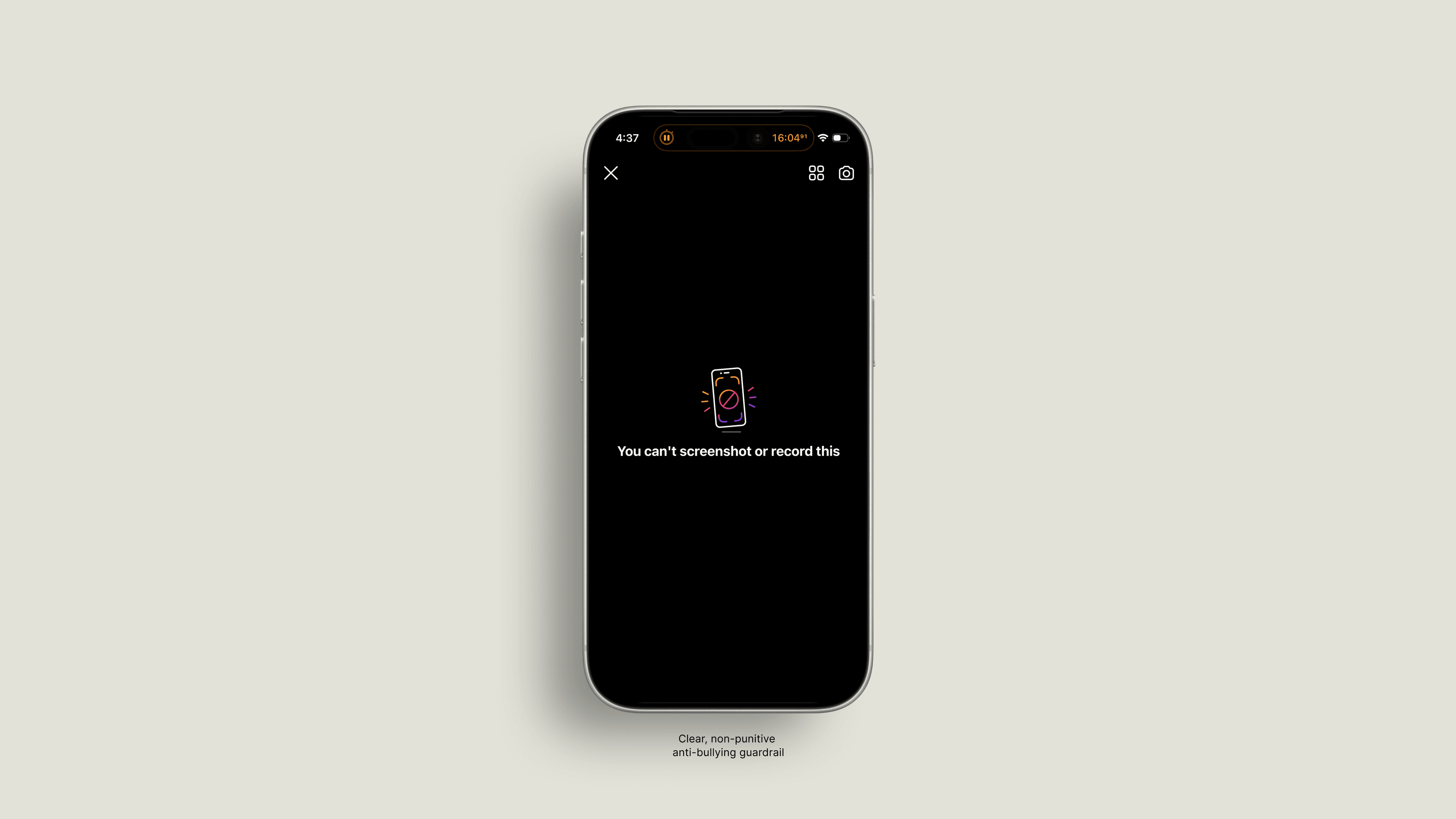
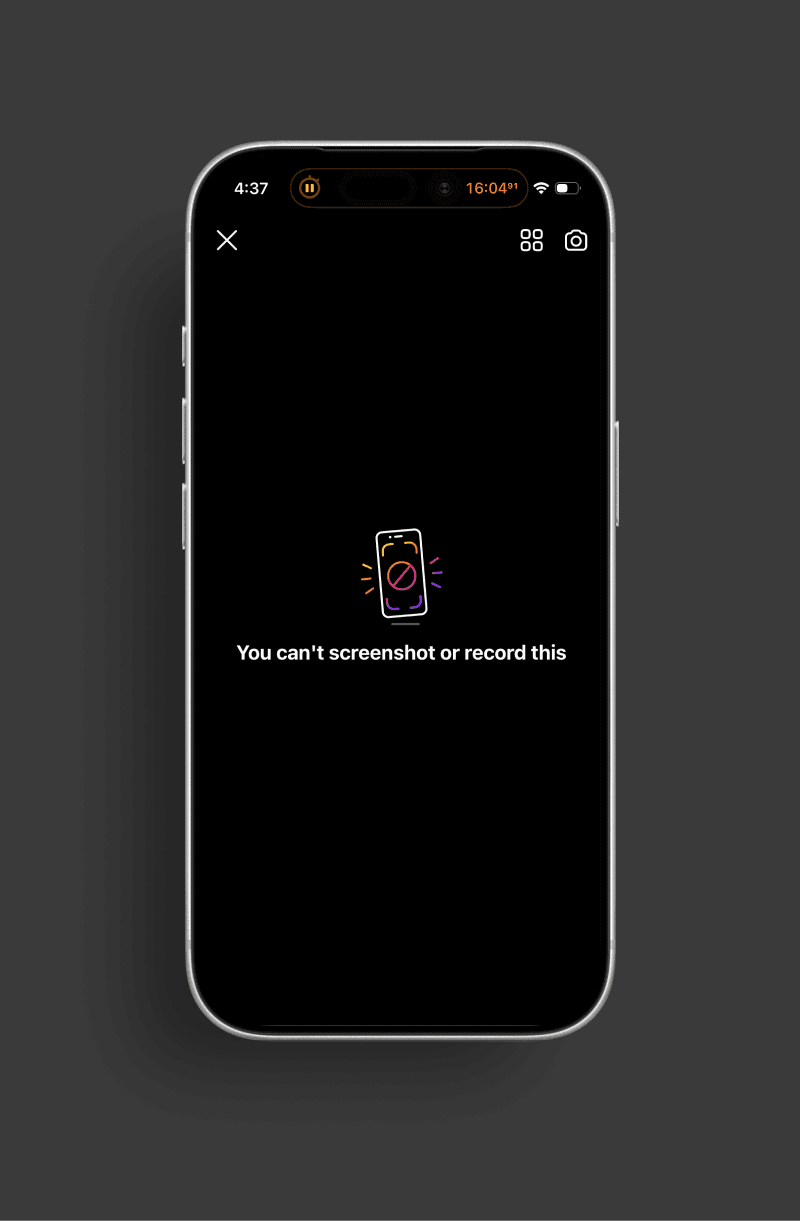
Disappearing photos can be misused, so I led a premortem with cross-functional partners to map bullying risks and edge cases before launch. That work shaped two protections: screenshots and recordings are blocked, and teens can snooze instants anytime. I wrote the block message to be plain and non-punitive, "You can't screenshot or record this," so it protects the sender without accusing the viewer.
4. Content system: A playbook that scaled Instants across Meta
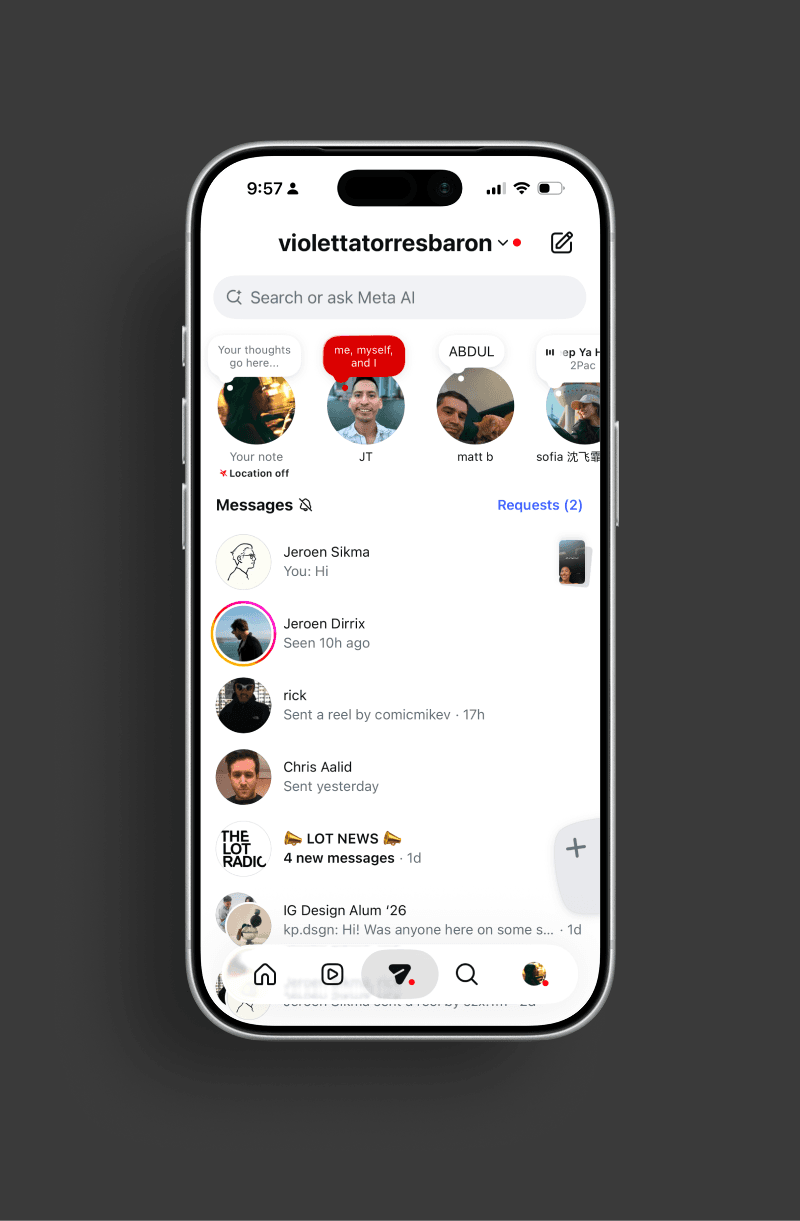
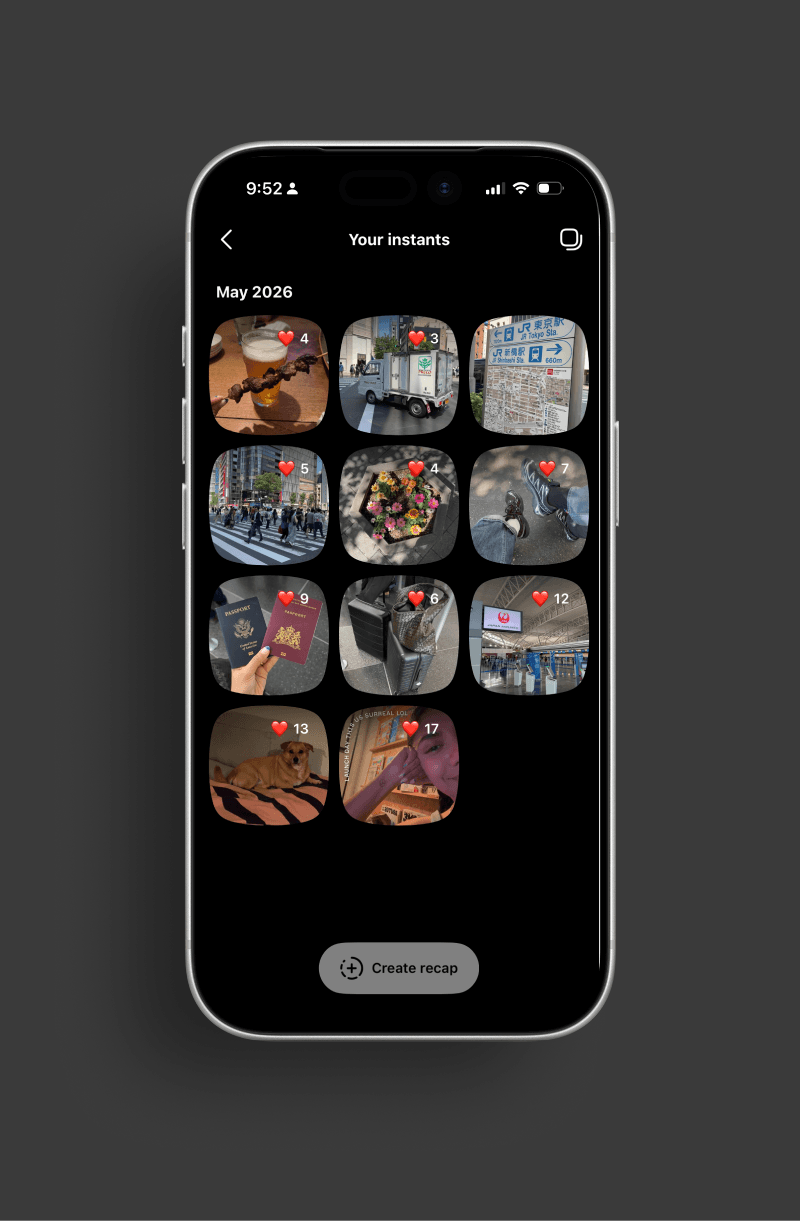
Instants introduced a new way to share, so it needed a shared language that would hold up beyond Instagram. I defined the core vocabulary, from instant and pile to actions like Create recap, and documented it in a content playbook for designers bringing Instants to WhatsApp and Facebook. The content standards covered terminology, onboarding patterns, notification guidelines, and safety messaging. Other teams could apply the system consistently without me in the room, and it became the foundation for Instants on both apps.
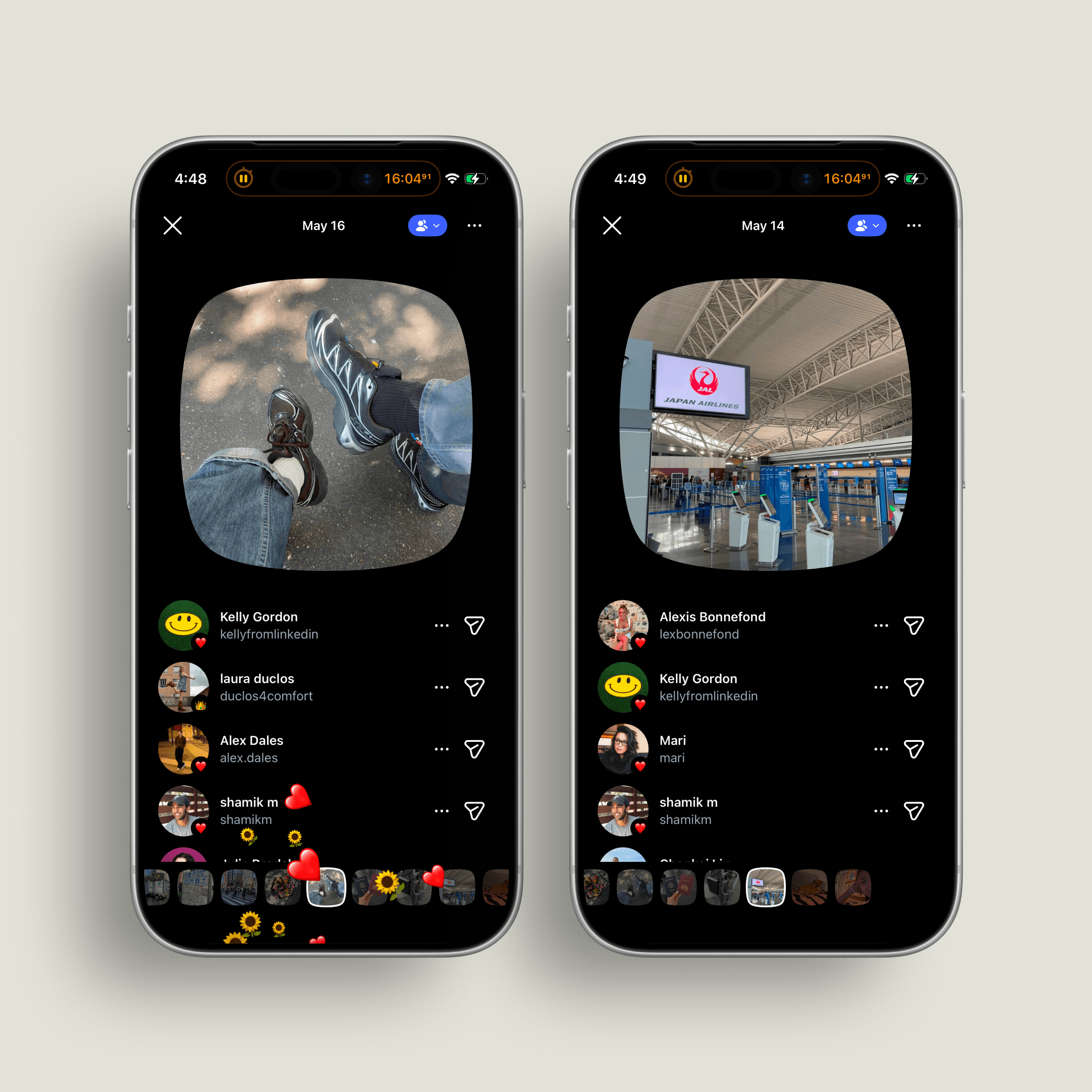
Final designs
Outcomes + results
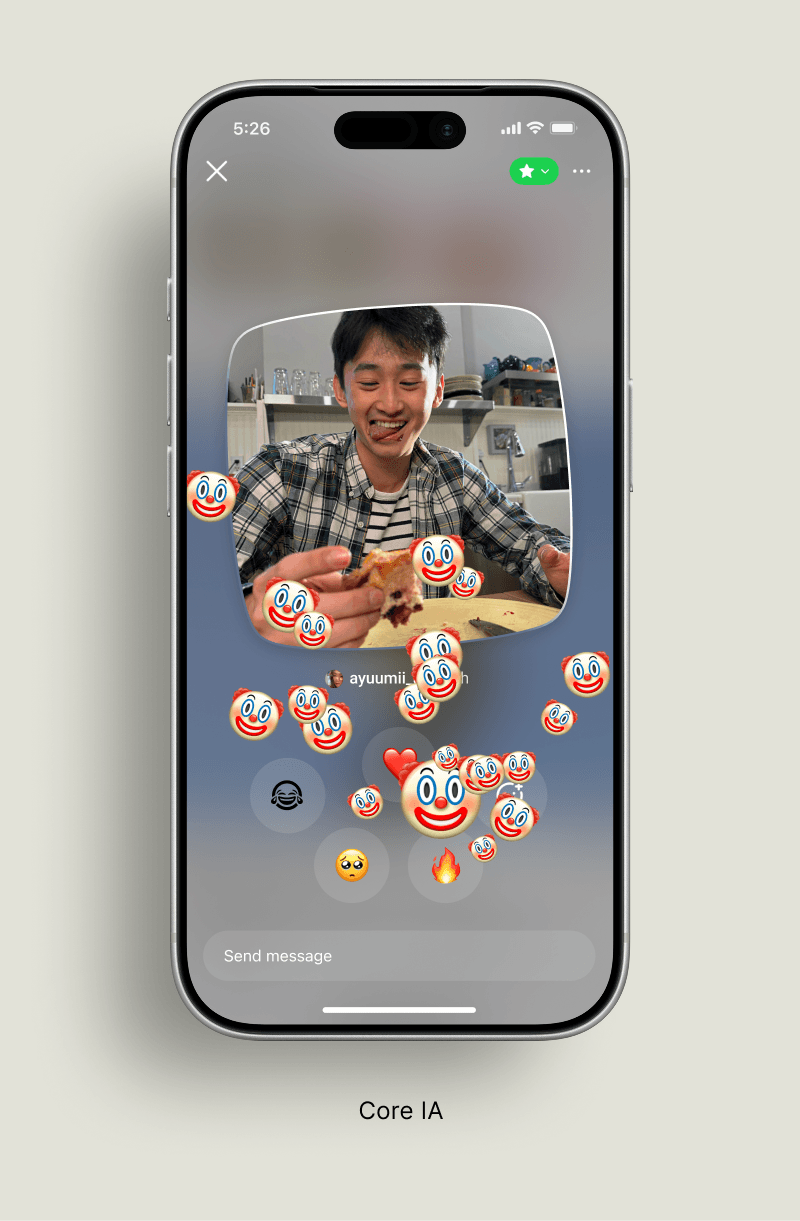
Instants created a new sharing habit for teens: quick, real-time photos with close friends, without the pressure of posting.
Metrics
- +24% teen media creation
- 51% teen producer retention, beating Stories and Notes
- Net session growth, with no cannibalization of other formats
What it proved
- Teens share more when it's low-pressure. Removing editing and permanence made sharing feel safe and casual.
- A standalone format was worth it. A dedicated experience delivered value that features inside Stories and DMs couldn't.
Impact across Meta
- Set the content standard for Meta. The framework I created for Instants now guides the same experience on Facebook and WhatsApp.
Reflections
Define the problem before designing the solution. Before writing a single word, I had to align the team on what "casual" actually meant.
Facilitate toward consensus. My role was less about being right and more about creating a clear path to agreement.