AI-generated profiles
Instagram's first UX system for disclosing, labeling, and enforcing AI-generated accounts.
Role
Design lead (Product and Content)
What I owned
Self-disclosure upsell, profile label, enforcement and appeals
Partners
Policy, Legal, Integrity, Engineering, Research, PM
Timeline
February 2026 – May 2026. AI creator label launched May 2026. AI-generated profile label shipped August 2026.
Impact
Instagram's first UX system for AI-generated profiles, from optional label to enforced policy. Improved sentiment about AI content.
The people problem
Users wanted to know if the person behind a profile was real, but had no way to tell. AI-generated personas were spreading on Instagram, and while posts could carry an AI label, profiles couldn't. Many users followed accounts that seemed human, only to feel deceived when they learned otherwise.
The business problem
Trust in Instagram was eroding. People felt the platform wasn't being transparent about AI-generated creators, which hurt how they felt about Instagram overall. Lower trust means less engagement, and ultimately, less revenue. Instagram needed to show people it was being honest about AI, without discouraging creators from using it.
The opportunity
How might we rebuild trust by telling people, clearly and honestly, when the person behind a profile isn't real?
My role + process
Because the system was built on language, content design led the work. I served as both content designer and product designer. With Policy, Legal, and Integrity, I defined which accounts needed a label, then designed the screens and wrote the copy for a three-step journey:
- Invite creators of AI-generated profiles to label themselves.
- Label those profiles clearly, wherever they appear.
- Enforce the label on unlabeled profiles, with a fair path to appeal.
We launched an optional label first to learn from it, then an enforced version.
Key content design decisions
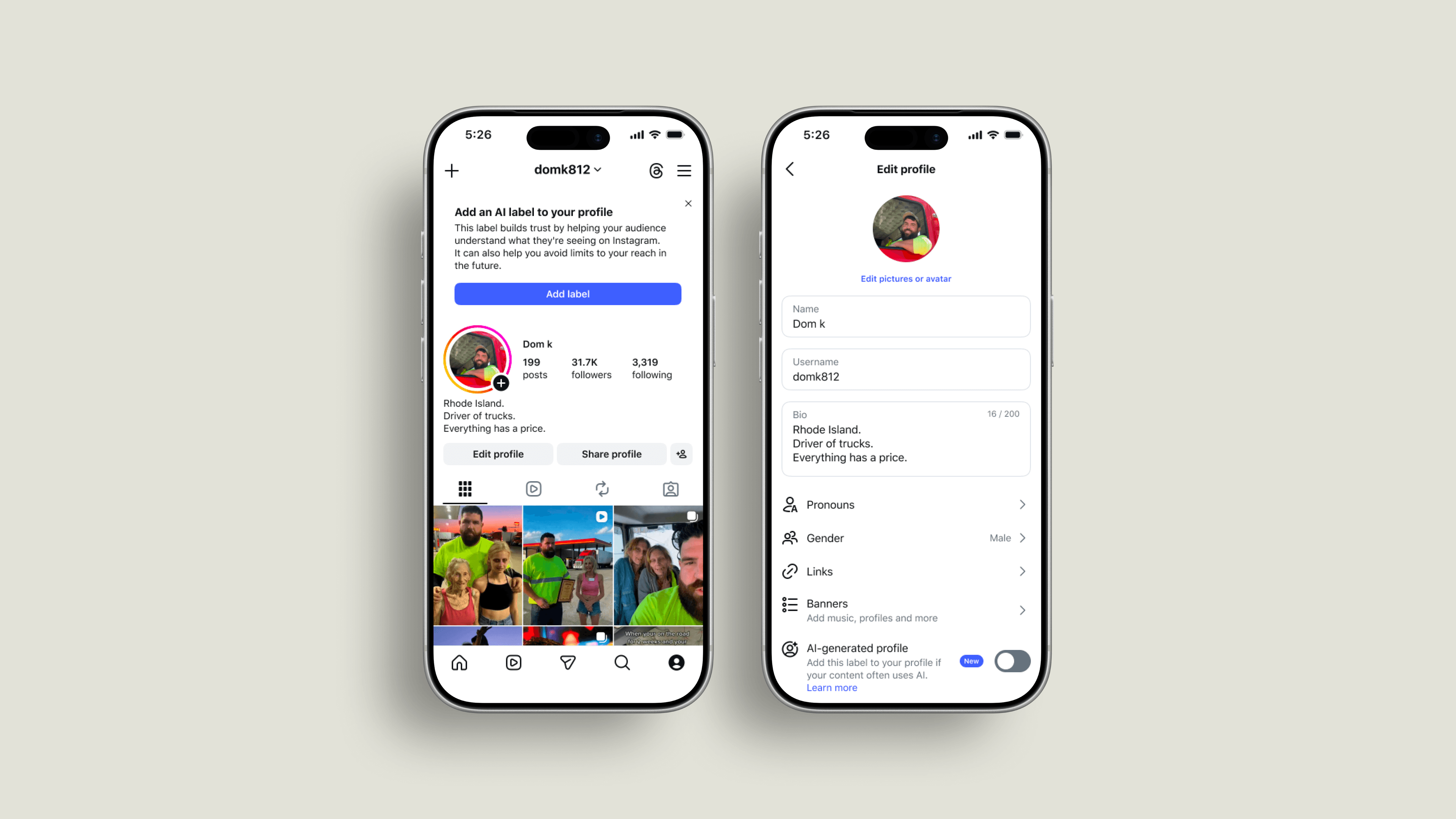
1. Self-disclosure upsell: Lead with trust, then reach
The system only works if creators label themselves, so I designed the invitation to make disclosure feel like a benefit, not a penalty. The prompt on their profile leads with what labeling does for their audience, building trust by helping people understand what they're seeing, then adds that it can help them avoid limits to their reach in the future. I also made the label easy to find in Edit profile, as a simple toggle alongside fields like pronouns and gender, so disclosure feels like part of describing who you are.
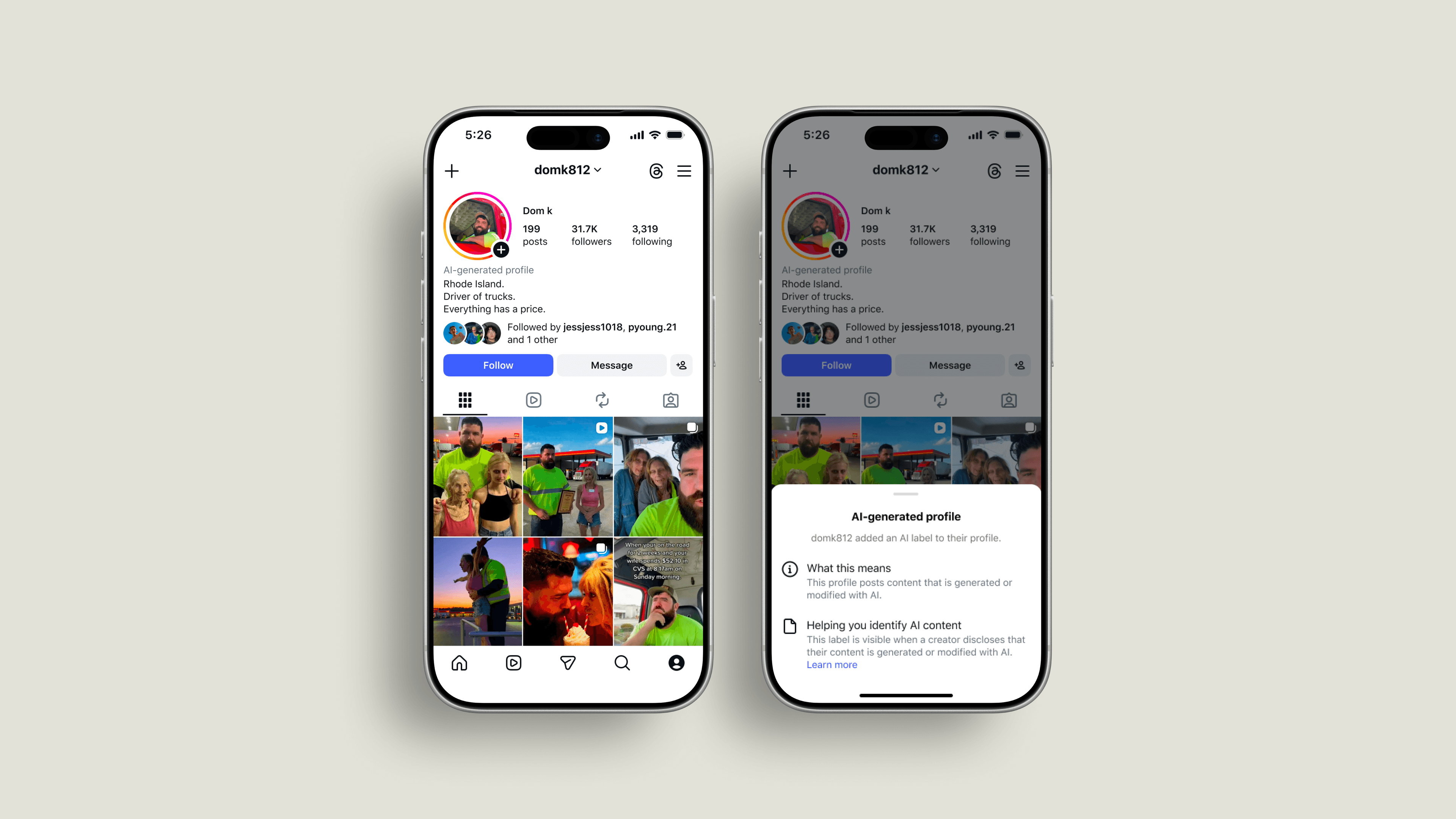
2. Profile label: "AI-generated profile," explained one tap away
I first championed "AI creator" over "AI profile," which implied the account itself was fake. When testing showed viewers mostly wanted to know whether the person was real, I moved to "AI-generated profile," and placed it right under the creator's name, where people decide whether to follow. One tap opens a short explanation that credits the disclosure to the creator, not Instagram, and explains what the label means in plain language.
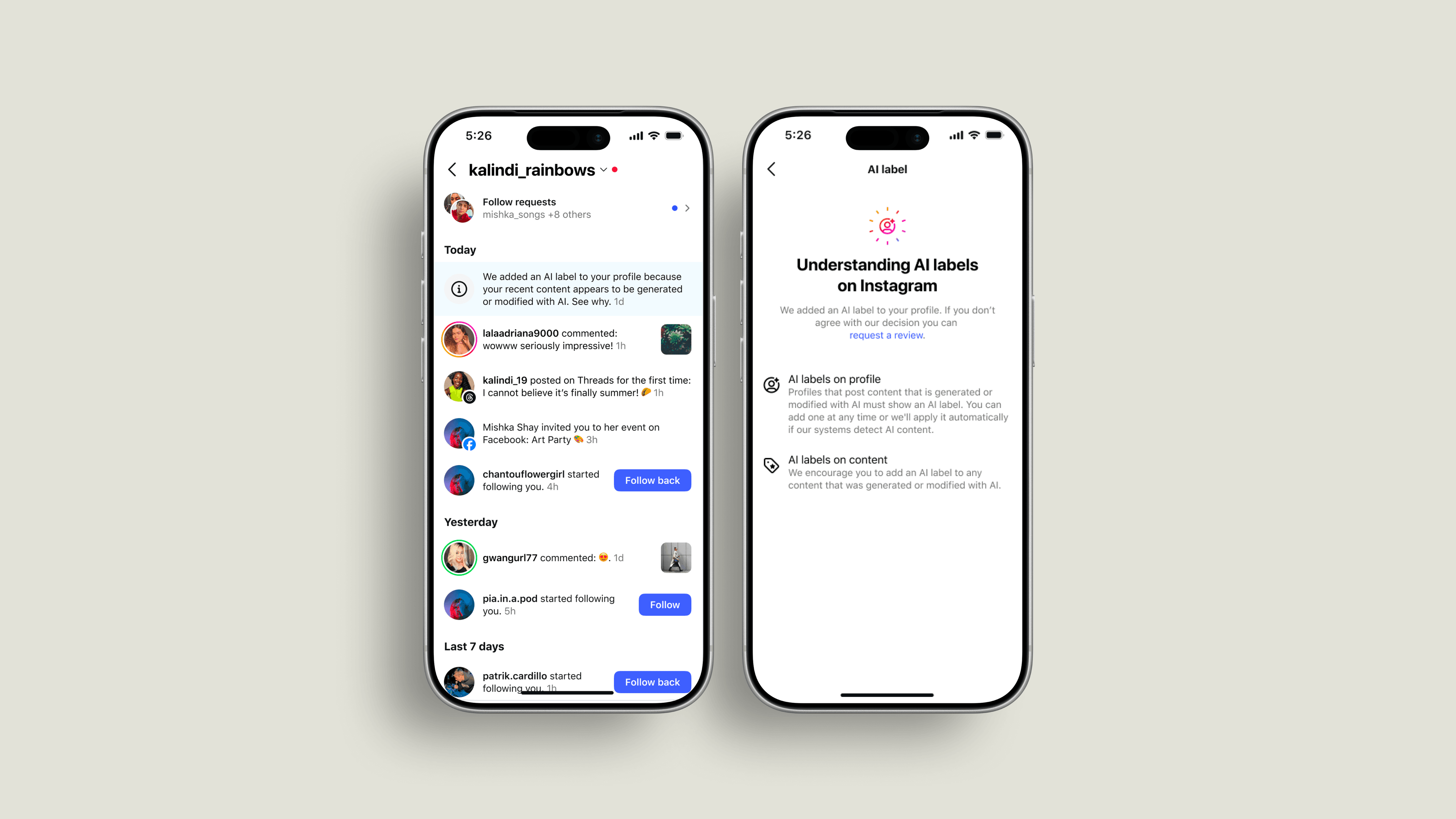
3. Enforcement: Explain the decision, not just the label
When our systems detected an unlabeled AI profile, the label was applied automatically, so creators needed to understand what happened without feeling punished. The notification tells them in one line what changed and why, using hedged language that reflects detection is an estimate, and links straight to the details. The explanation screen lays out the labeling rules for profiles and content in plain terms, so the decision feels grounded in clear policy rather than arbitrary.
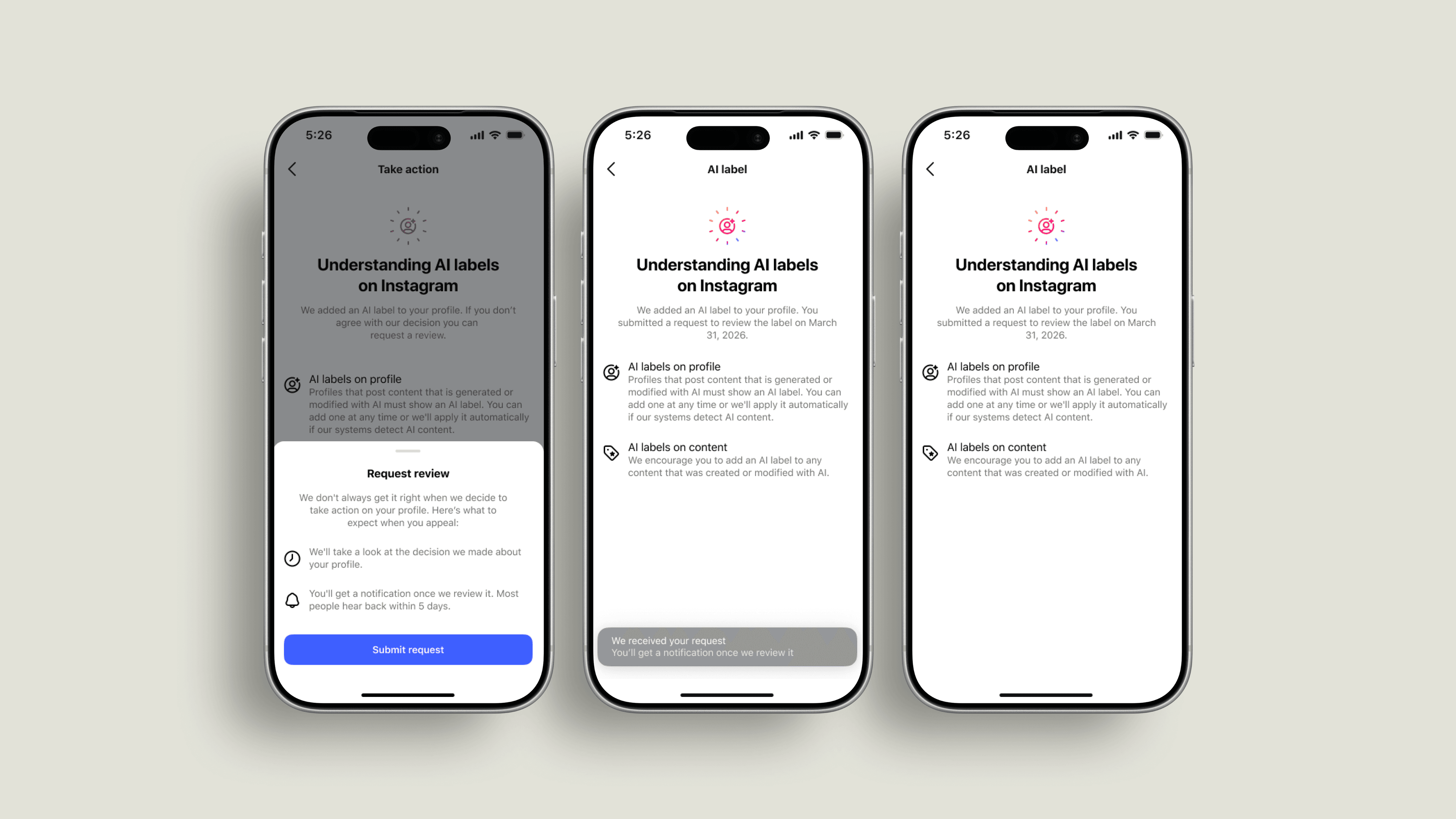
4. Appeals: A fair process creators can trust
Automatic labels only feel fair if creators can push back, so I made requesting a review easy to find and easy to complete. The review sheet starts by admitting that we don't always get it right, then explains what happens next and how long it takes. Once submitted, creators get an instant confirmation, and the page keeps a record of their request, so they're never left guessing.
Outcomes
- Instagram's first UX system for AI-generated profiles, covering self-disclosure, labeling, enforcement, and appeals
- Rebuilt trust: In research after launch, people said they could finally tell who was behind the profiles they saw.
- Shipped in two phases: An optional label in May 2026, then a clearer, enforced version in August 2026
- A fair path for creators: Creators can label themselves in one tap, and anyone labeled automatically can request a review.
Reflections
Design for both sides of the label. Viewers needed the truth, and creators needed to be treated fairly. Every screen, from the invitation to the appeal, had to work for both.
Transparency is only as good as its language. Detecting AI-generated profiles was a technical problem, but rebuilding trust was a language problem. The label, its explanation, and the enforcement copy did more to change how people felt than the detection itself.