AI Translations on Reels
Helping creators reach new audiences by translating their Reels in their own voice.
Role
Content Design Lead
What I owned
Value proposition, upsell messaging, feature debrand, consumption redesign, UI copy
Partners
PM, Product Design, UXR, Data Science, Engineering, Brand, Legal, PMM
Timeline
Nov 2025 – Feb 2026
Impact
2.5x upsell conversion. 63% first-time trial adoption. Highlighted on Meta's Q4 2025 earnings call.
The people problem
Creators on Instagram grow by reaching more viewers, and reaching new audiences was their biggest challenge. AI translations were built to help. The feature dubs a creator's Reels into other languages using their own voice, so a creator who speaks Spanish could reach viewers who speak English or Hindi. But few creators used it, for two reasons: it was introduced as new technology without explaining how it could help them grow, and its "Meta AI" label made them worry their videos would look fake.
The business problem
Meta was investing heavily in AI, and needed to show that investment was paying off. AI translations were one of its showcase features, and Mark Zuckerberg planned to highlight them on Meta's Q4 2025 earnings call, the quarterly update to investors.
When I joined the team, a few weeks after launch, adoption was low. The feature needed to prove its value quickly, to creators and to the business.
The opportunity
How might we show creators that AI translations can help them reach a bigger audience?
Finding the solution
Working with UXR and Data Science, I dug into why adoption was low. The data showed something surprising: creators who tried translations kept using them, and some called reaching international audiences life-changing. The feature worked. The challenge was getting creators to try it in the first place.
Three barriers stood in the way, and all of them came down to how we communicated:
- Awareness: Creators didn't see translations as a way to grow. They saw a tech experiment.
- Relevance: Promotions sometimes appeared on videos that couldn't be translated, so they felt random and made creators tune out future prompts.
- Trust: The "Meta AI" label made creators fear their work would look inauthentic.
Because each barrier was a content problem, I created a content design roadmap that aligned Product, Engineering, and Marketing on fixing all three: focusing the messaging on reach, inviting creators to try translations on a single reel, and replacing the "Meta AI" label with a simpler one.
Key content design decisions
1. Value proposition: "Reach more people," not "Try AI translations"
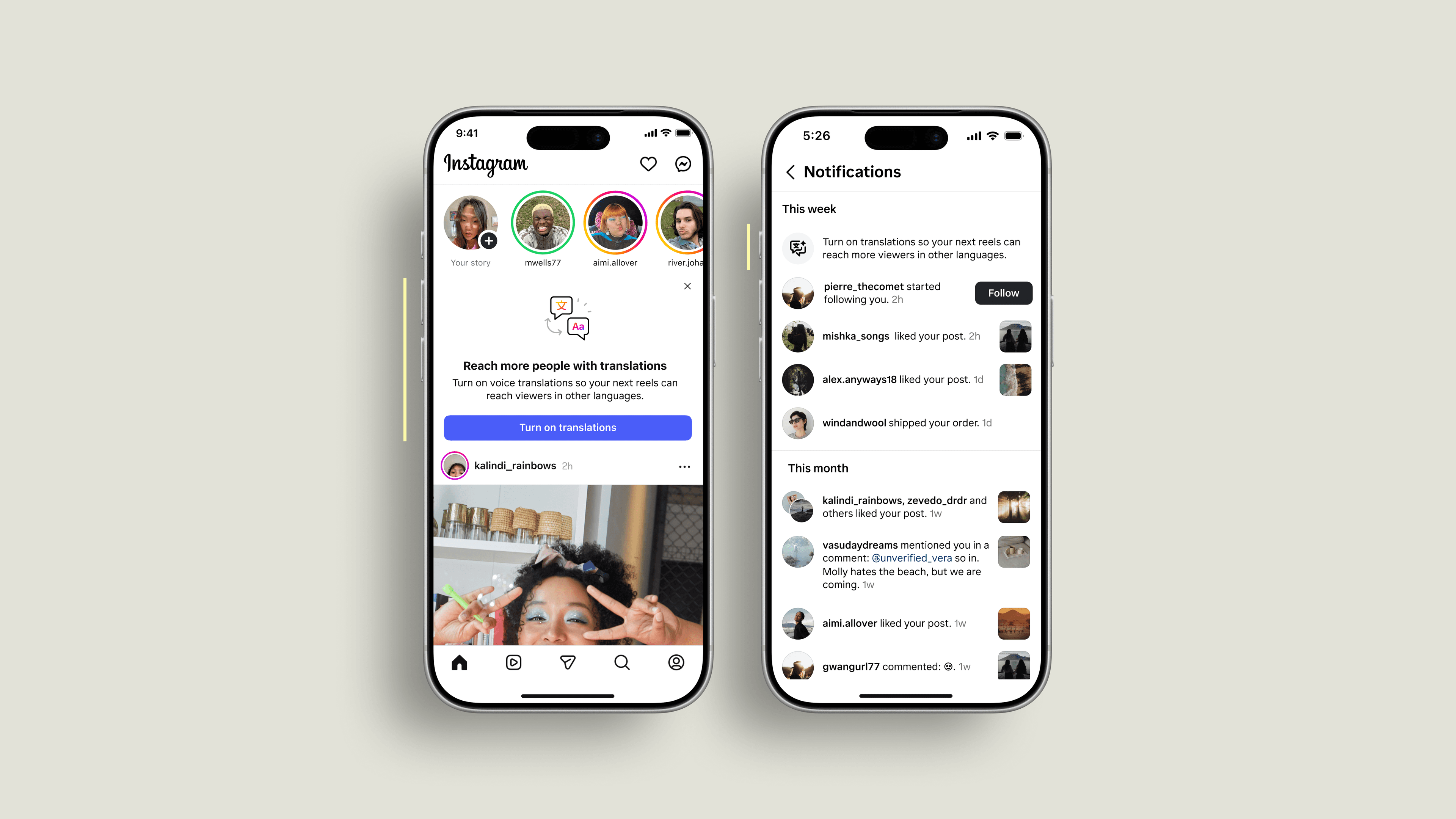
Early promotions explained how the feature worked, asking creators to "try AI translations," but that didn't tell them why they should care. When value-prop testing showed that reach was creators' #1 motivator, I led a rewrite of every entry point, from in-feed promotions to notifications, to open with that benefit: "Reach more people with translations." Leading with what creators get instead of what the feature does made the promotions convert 2.5x better than the originals.
2. Contextual upsell: "Your reel is on the rise," one reel at a time
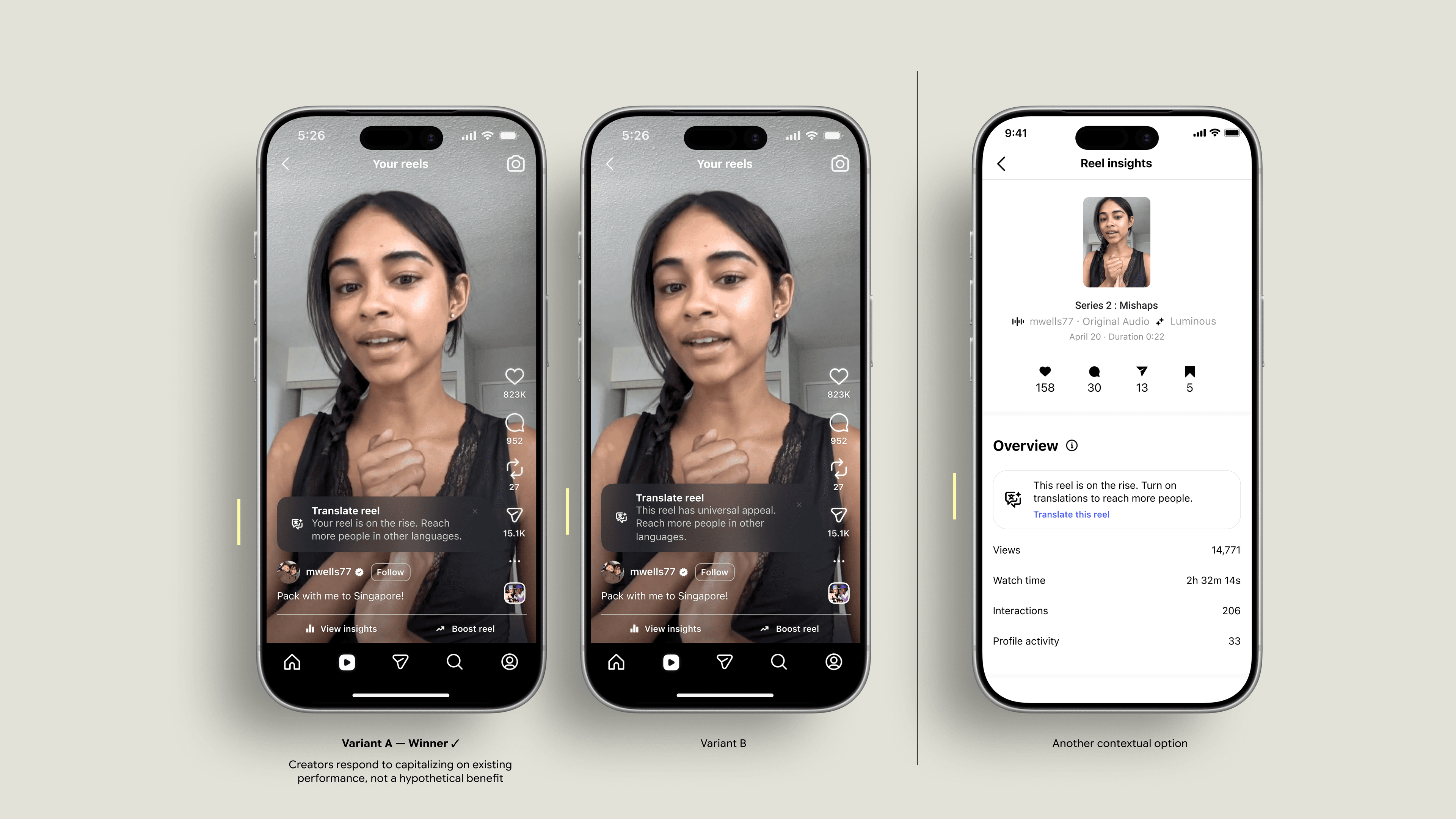
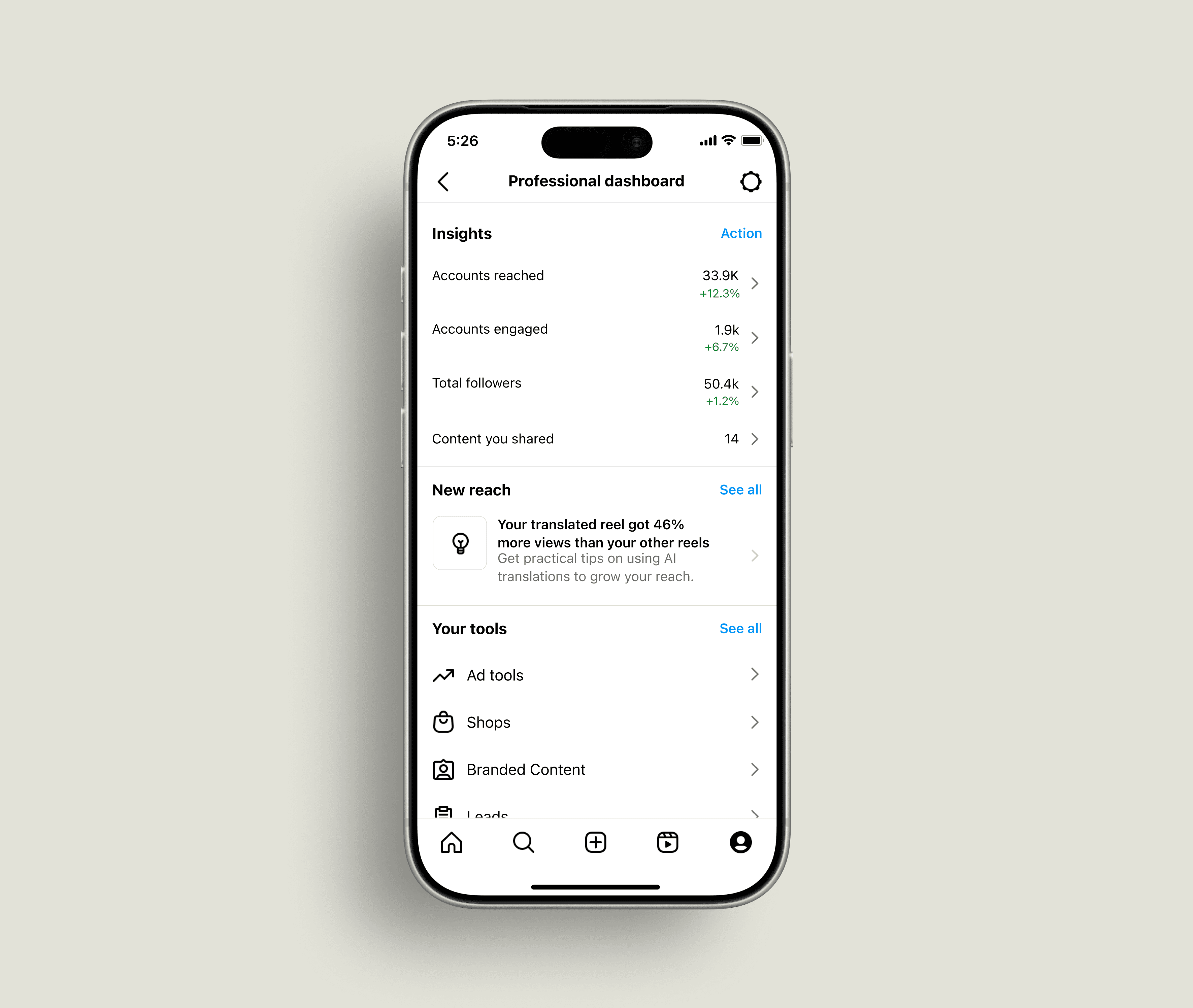
Turning on translations for every video felt like too big a risk, so I partnered with Product Design to offer a low-stakes trial on a single reel, shown where creators already check how their videos are performing. I tested two framings and chose the one grounded in each reel's real momentum, "Your reel is on the rise," over a generic claim of broad appeal, because creators trusted what they could see in their own numbers. These single-reel prompts drove 63% of first-time trials, becoming the top way new creators started using translations.
3. AI disclosure: "Translated with AI," not "Translated with Meta AI"
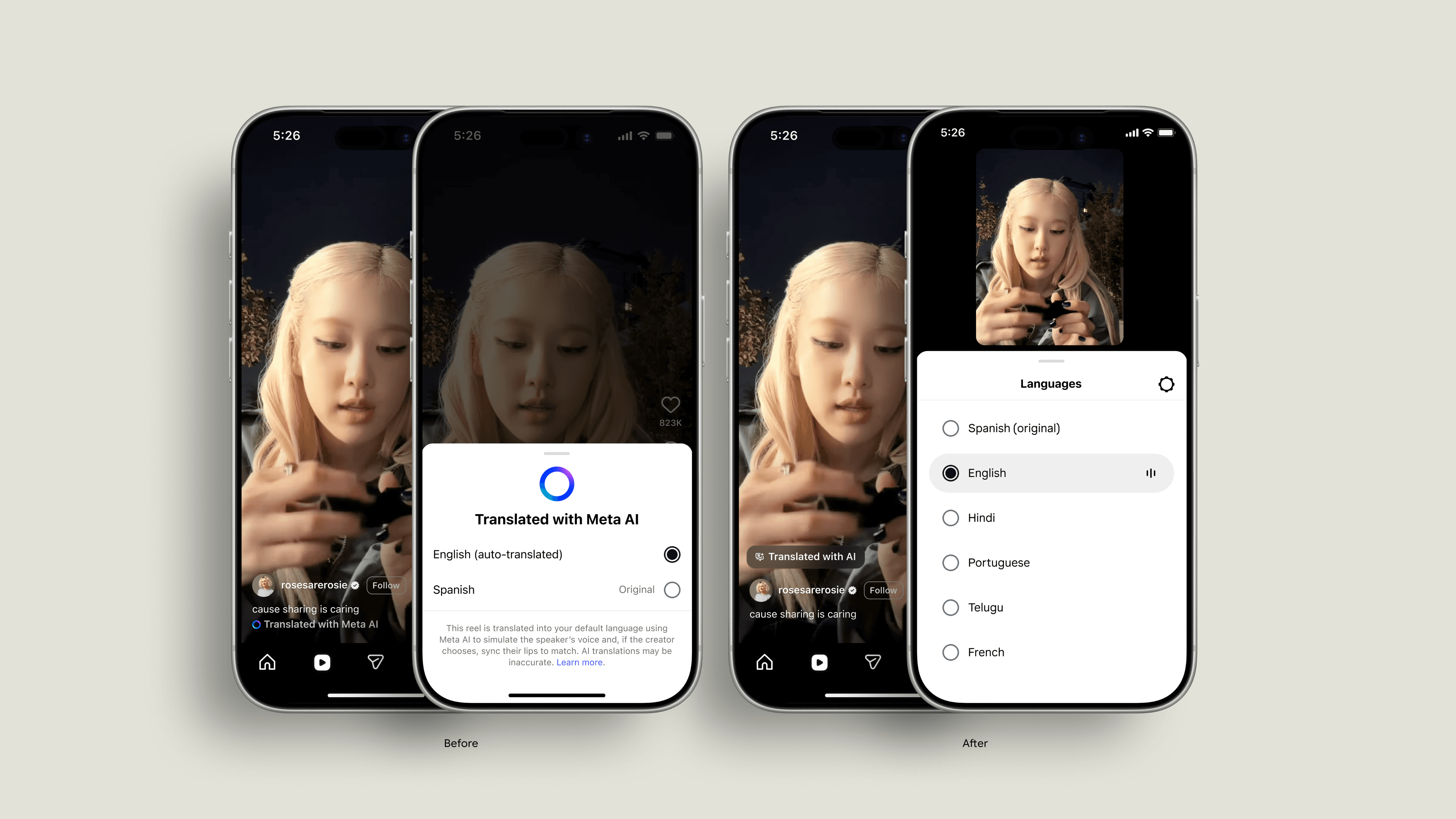
Legal and Brand wanted to keep the "Meta AI" badge, but research showed creators feared it made their work look low quality. I used that evidence to align Legal, Brand, and Product on a simpler label, "Translated with AI," that still told viewers how the video was made. It met disclosure requirements while removing a key barrier to adoption.
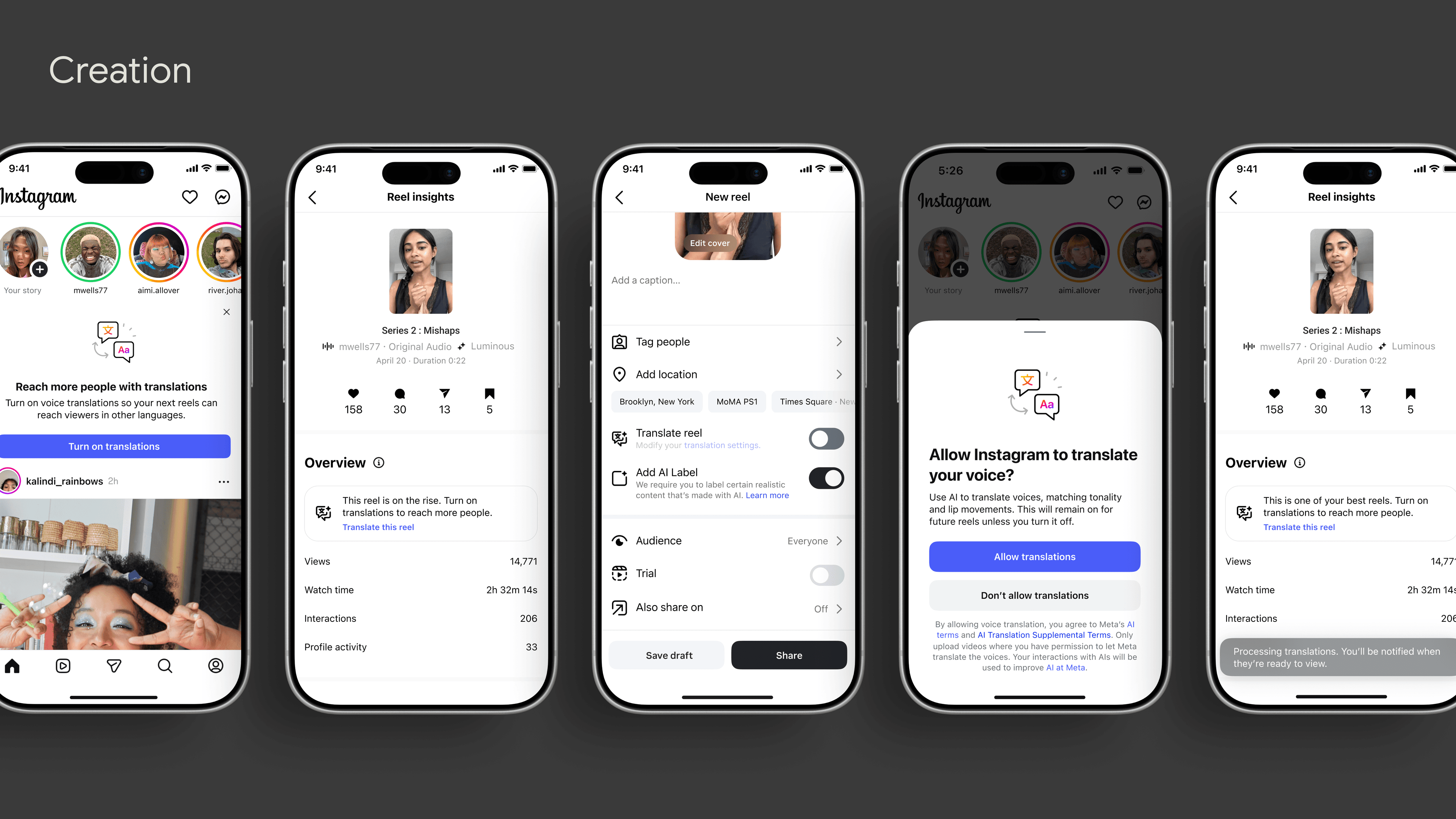
Final designs
Outcomes
- 2.5x conversion on value-led upsells vs. generic promos
- 63% first-time trial adoption through single-reel entry points
- 100M+ people watching AI-translated reels every day
- On the Q4 2025 earnings call, Mark Zuckerberg cited hundreds of millions of people watching AI-translated videos every day.
What's next
With the earnings milestone met, the focus shifted to long-term retention. That meant showing translation results in post-level analytics, swapping global toggles for contextual controls, and making processing delays transparent with clear status updates.
Reflections
Lead with the outcome, not the AI. Creators didn't care how translations worked. They cared about reaching more people. The less the messaging focused on AI, the more creators adopted it.
Move fast, but plan for what comes next. The earnings call required quick wins. Being clear about which fixes were temporary, and which needed deeper work, kept speed from turning into lasting design debt.